
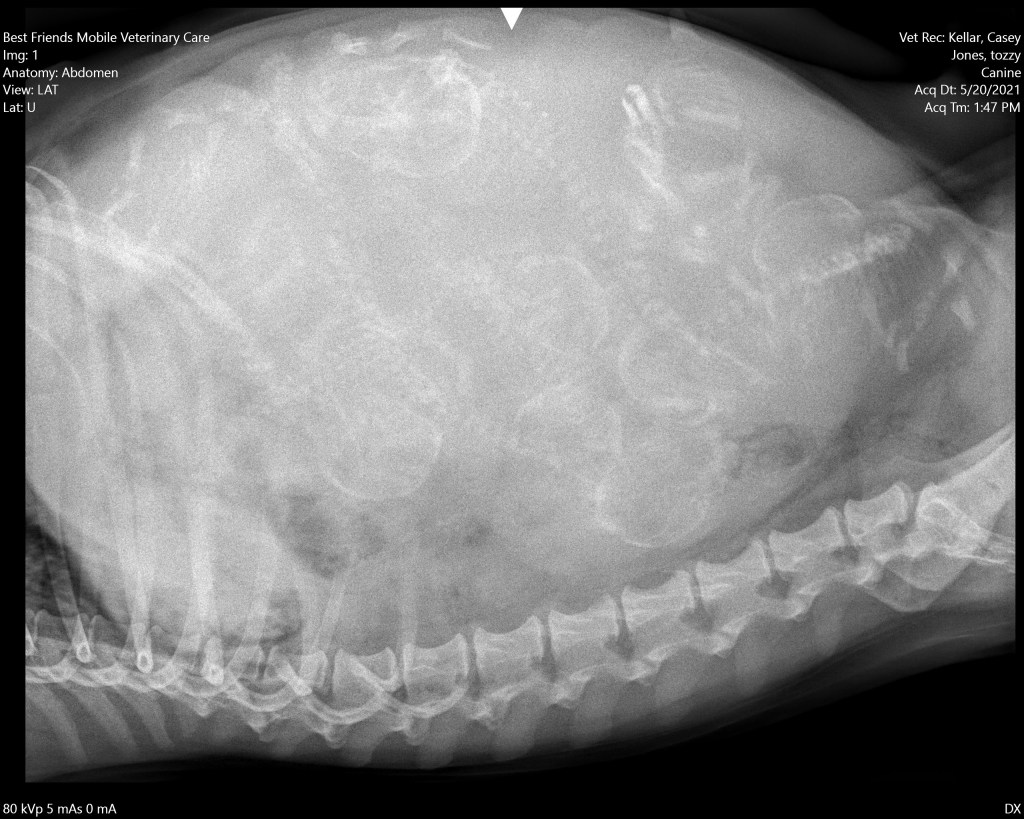
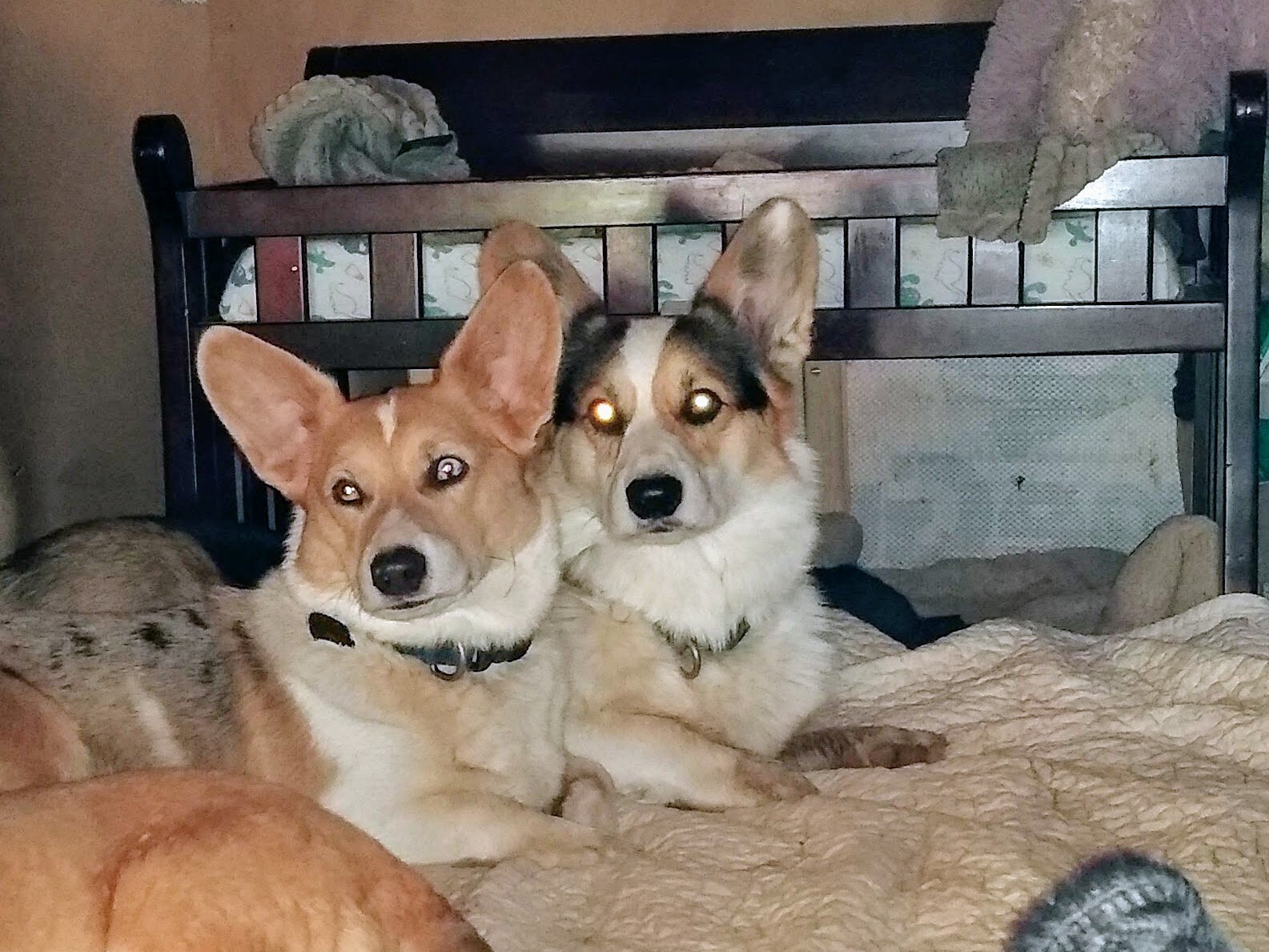
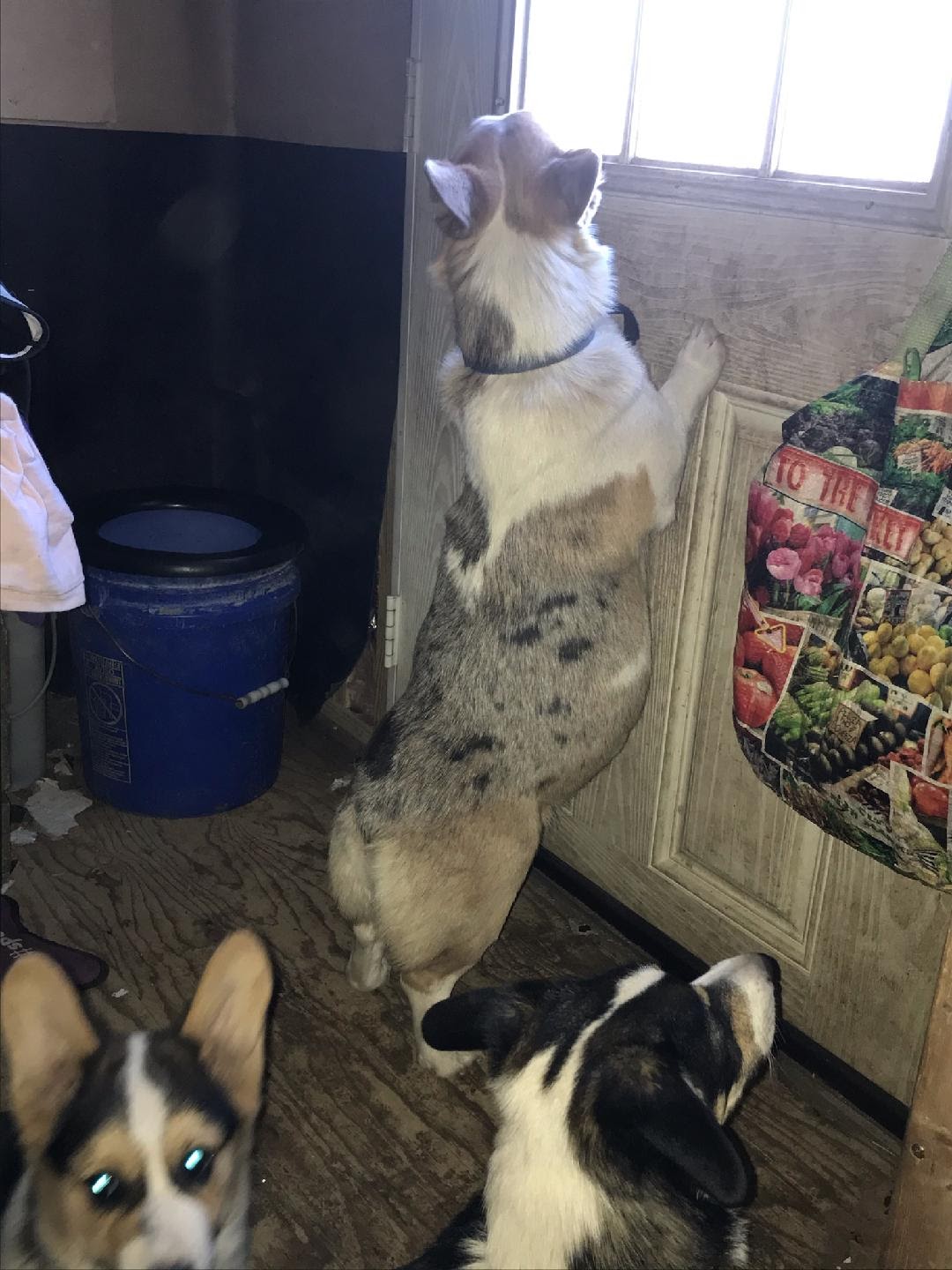
Everyone is growing like crazy! Tahzi is amazing. This is her first time raising puppies, but she acts as though she has done it many times. She is quiet and very gentle with them. She watches where she walked and is very careful to get all of them on one side. It’s great to watch her slowly slide them out of her way with her belly as she oozes down the side of the whelping box. What is really funny is that she needs them into groups sometimes.s Once we found the merle in one pile and the grid in a second pile. We were fostering 2 extra merles, so there was a total of four. Another time she had them segregated by sex.
The little ones are pretty much the same as at birth. They eat, they sleep, the poop, and pee. Dot is a little bit of a loner, he lays off by himself often. Baloo is a gluten, I always find him nursing. I really do mean always!
Later this coming week, probably Friday or Saturday, eyes will begin to open and the will begin to crawl around a tiny bit rather than scoot and paddle around on their bellies. Mom will continue to potty them. Well, she will continue that long past them needing her to. But they still need stimulation until they are anywhere from 2-4 weeks. They will begin to start sampling mom’s food as soon as their eyes are open, and will be able to start eating more solid foods in there third week. In their forth week they should be eating fairly well.
I have had Alaskan Husky and Siberian Huskies wean their pups at 4 weeks! I also had a Samoyed female that still allowed her pups to nurse at three months. We finally had to separate them, puppies out of seeing distance, for her to dry up!
Just know that there is a huge variance in when mom begins weaning. Till this point, they have been getting I munity to illnesses through mom’s milk. Once she begins to cut them off, they begin to lose that immunity. This is a really s dangerous time for them. Mainly because of PARVOVIRUSES. Parvo is a life threatening virus that is highly contagious. Any dog can carry it around on their feet or fur by stepping or rolling in grass that had at some point contained feces that was infected.
Here is a scenàrio that can happen. Your home is completely clean of parvo. UPS rolls up and delivers a package. Perhaps one of the tires on the UPS truck rolled through parvo infected feces. When they pull out, you walk into the driveway to get in your car, check the mail; whatever. You walk where the truck was and then you go back to your house, yard, garage. Now your home is no longer virus free. If your dog is not vaccinated for both strains of parvovirus, they could get it. Older dogs generally have a built up immunity, so they may show no sign of illness. But they are still shedding the virus through their poo. Now any canine that comes and sniffs that poo will be exposed to it. It is so incredibly easy to spread.
Some might think that breeders are paranoid when it comes to their puppies. But you cannot be too paranoid when it comes to protecting these precious lives.
When mom begins weaning, puppies have less and less immunity. Most vaccines are overridden by any remaining antibodies given by mom. So there is a seriously dangerous period between 4 – 12 weeks.
Really, they are in danger right till they are about 6 months, according to veterinarians. The hope is to catch the puppies going off mom’s immunity and bridge the gap fast with vaccines. Veterinarians recommend vaccinating at 8, 12, and 16 weeks. Then yearly boosters.
Personally I do not feel this is an adequate schedule to stave of the devastating effects of PARVO. I begin vaccinating at 4 weeks. Puppies have teeth now, and mom is less inclined to voluntarily get bitten. So they nurse less, getting fewer antibodies. I only vaccinate for Parvo at this time.
At 6 weeks I administer a 7 -way for Canine Distemper Virus, Canine Adenovirus Type 2, Canine Parainfluenza Virus, Canine Parvovirus (modified live viruses), Coronavirus (inactivated virus). I only use Nobivac vaccines, as they are the only ones that positively cover BOTH strains of the Parvovirus other than Neopar.
8 weeks I give another Parvo only shot. 10 weeks is another 7 way. 12 weeks Parvo
16 weeks (4 months) 9 way Canine Distemper Virus, Canine Adenovirus Type 2, Canine Parainfluenza Virus, Canine Parvovirus (modified live viruses), and Leptospira Canicola-Icterohaemorrhagiae (inactivated bacterin).
5 months another booster 9 way Canine Distemper Virus, Canine Adenovirus Type 2, Canine Parainfluenza Virus, Canine Parvovirus (modified live viruses), and Leptospira Canicola-Icterohaemorrhagiae (inactivated bacterin). You should also vaccinate for rabies at this time.
Now I nwould feel that my puppy was totally protected. Follow up with a yearly booster with lepto and coronavirus protection. Coronavirus has been found to be very rare in some areas and your veterinarian may tell you that vaccinating for it is not necessary. However, if you live in the mountains where a lot of wild animals hang out, I disagree. Or if you hike/camp/recreate in the hills, again I recommended a Corona and Leptospirosis booster.


 Faery Mount Farm