Corgi Chaos 101: Dog Behavior and Training

The situation: Mom comes home and chaos ensues
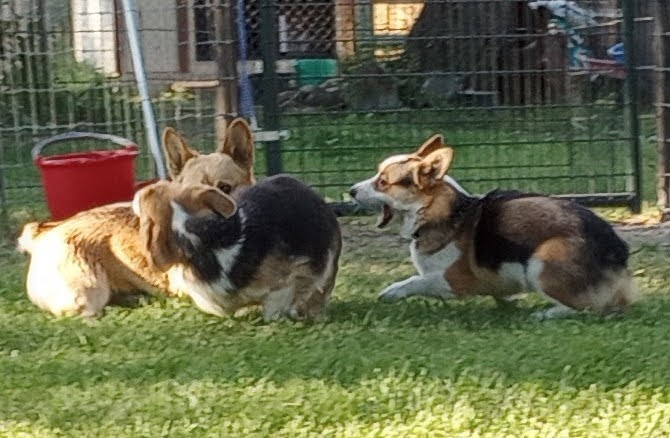
Today we are going to focus on a behavior I was recently asked about: A young dog that is obedient and pleasant until his (human) mom comes home. Everyone in the family is an adult, and there are other dogs in the house. It is harmonious until mom enters the scene. Freddy is mom’s dog. Once she comes home, he becomes difficult to manage, runs around wildly, barking and jumping on everyone, and becomes aggressive towards the other dogs in the house. How do we fix this situation?


Freddy is just a puppy and looking for his station in life. He may or may not be getting enough exercise. That is the first question I ask. How much exercise does Fred get? Fred is a corgi, so he’s in the middle of the energy spectrum. Minimally, two hours a day of focused activity keeps these guys satisfied. This activity should be at least one or two walks of 30 minutes or more, plus some other interaction that either challenges the brain or the body, or both. Fetching, frisbee, obstacle course, puzzles, hide and seek, obedience training, swimming, treadmill, grooming, play dates with other dogs, a trip to the dog park, herding — there are so many things you can do with your corgi to work their mind and body!


These exercises help eliminate agitation, stress, and physical energy. This in turn makes your dog satisfied and calm. Here is a very important word: Calm. What does a calm dog look like? They are laying quietly, sitting beside you without insisting on attention, not barking, and running around. They might yawn and lay down, their ears will be relaxed, their eyes are regular size and not bulging like they are going to pop out any second, their tail (or stub) isn’t going a million miles an hour.


A calm, relaxed, nonresistant dog can hear you when you ask them to do something, like sit or stay. They will pay attention while you teach them something new. They don’t exhibit energy from frustration or aggression. I cannot emphasize enough the need for all dogs to exercise. And I don’t want to burst anyone’s bubble but running around free playing in the back yard is absolutely not enough exercise. Yes, it’s nice for them to have that space to play and run when they want to, but there is no replacement for an in-hand deliberate and continuous walk.


The walk is the best time to show your leadership and prove your merited place of pack leader. I mean a real walk. Not a drag down the sidewalk or a pee and sniff fest. I mean walking beside you or behind you on a loose leash. Continuous, not stop and go. Just go. I will cover the walk in another talk soon, because the walk should be a union of the souls and melding of the minds and be ritual in its core. This is the most basic and yet most important activity you do with your canine companion because it touches them in the deepest prehistoric place in their brain and so commands their ever-present instinctual reactions.


So, we got this, right? Number one thing to help Freddy with his bad behavior is daily exercise with consistent leadership.


Next, mom must let Freddy know that she doesn’t approve of his behavior. How to stop the crazy barking jumping and running around wildly is to not greet him with excitement. In fact, don’t greet him at all. Don’t touch, don’t talk, don’t make eye contact when you walk in the door. Ignore him completely until he becomes calm. If you give affection while he is being crazy, you are telling him that you like him to run around being crazy. It’s hard to do, you’re happy to see him too, and you want to snuggle him and tell him how much you missed him, and he wants to tell you the same thing. But it creates energy that leads to behavioral problems. So don’t give him affection while he is out of control. Don’t give him affection at any time he is exhibiting behavior you don’t want him to do.


The number two thing to help Freddy is to never reward unwanted behavior.


Since Freddy is being aggressive with his canine roommates during this time, he should be leashed. Mom needs to be calm and confident and place herself between Freddy and the other dogs, then claim them as hers. She needs to let Freddy know that the other dogs are hers and she will not tolerate the dominance he is exhibiting over them. Other family members, also being calm and confident, can help by backing up Mom’s lead. Freddy needs to be taken to a state of calm compliance before the exercise is complete. If Mom goes only partway, say he is still running around but no longer going after the other dogs, and she stops there, then Freddy will continue responding in an excited dominate state of mind whenever Mom is home. She must take him all the way to calm compliance. This is by far the most difficult part because she must be patient and take as much time as it takes for Freddy to succeed, no matter how tired or busy she is (it’s hard, we understand!). Hopefully, because he is young and malleable, it will be quick and easy. But usually, the first 3 times will be the most difficult, and on day 3 he will act out the worst.


So, the number three thing to help Freddy is what? The patience and determination to get him all the way to calm!

Scene #1 Utter Chaos


Brother is in the study working on computer. Big, older Labrador is laying in the hall fast asleep. Sister is in the kitchen making dinner. Fred the corgi is in the living room staring out the window, tense, whining a little bit. Outside a car pulls up and Mom gets out, and suddenly the house erupts with loud barking and feet thudding as Fred leaps over the couch, down the hall, and nearly knocks Sister over because she was going out to help Mom with the groceries. Fred, in his heightened state of agitation comes across Labrador and immediately attempts to start a fight by snarling and barking and grabbing the bigger dog’s ears. Labrador cries and tries to get out of the way. His cries seem to encourage Fred and he now has hold of Labrador’s neck and won’t let go.
Now we are in the hall with two dogs brawling with each other. Mom opens the door into the hall with some groceries. Fred lets go of Labrador and charges to Mom, leaping on her and nearly knocking her down. Sister is yelling at Fred; Labrador is trying to leave in a hurry and now Brother shows up to help.


The house is in utter chaos. Freddy is charging around, back and forth between the front door and the kitchen, barking and leaping on random people. Everyone is yelling to be heard over the dog, and alternately yelling at Freddy to shut up. Twice more Fred nearly knocks mom down by running up to her and jumping up, or just body slamming himself into her legs. The lab wants in on the affection and reenters the hall. Suddenly Fred turns his very ramped up energy into fight energy, and once again attacks the Labrador. So at this point you get the scenario. Utter chaos.

Scene #2 How to stop what happened in scene #1

Step #1 Everyone is in their places: Brother is in study working on computer. Big, older Labrador is laying in the hall fast asleep. Sister is in the kitchen making dinner. Fred the corgi is in the living room staring out the window, tense, whining a little.
Outside a car pulls up and Mom gets out, and suddenly the house erupts with loud barking and feet thudding as Fred leaps over the couch, down the hall, and….


Finds Sister taking possession of the hallway by standing up straight and portraying a calm dominant woman that doesn’t allow dogs in her hall when they are in an agitated, aggressive state. Brother comes to help by also owning the hallway and the Labrador.

Blocking with calm dominant energy

Mom waits in the car (she is older and standing out in the rain is not good).


Sister and Brother both block Fred’s every movement, demanding that he becomes calm and quiet by using an authoritative voice or using hands only. They might make a Shhht sound, snap their fingers, and say “hey!” or “no!” in an authoritative tone. They never yell and continue to maintain their calm dominant energy. Finally, Fred sits down and allows Brother to put a leash and collar on him. Using the leash and collar, Fred is kept at the spot where he was caught. He makes Fred sit using his voice, hand gestures, and leash to keep him in place. Brother isn’t overusing his verbal commands, but is relying primarily on his energy, leash, and hand gestures. (Often when I do this exercise I rarely talk to the dog. Most of the time, I use my hands to block his movement and small, sharp tugs on the leash when he begins to bark or leave the spot I have him sat down in.)


Meanwhile, Sister goes out to the car and gets Mom in. Freddy will try to explode, but brother must insist that he sit there quietly while mom gets in the door and finishes hauling in whatever is in the car. Freddy tries to bark, jump, pull back, chew on his leash, and charge forward. Brother is calm and assertive while stopping him from these actions by continuing to make him sit back down in place, and not allowing him to bark or be out of control.


You must have a leash and collar on to do this exercise. Harnesses, regardless of who made them or what they were supposed to be made for, are still a harness. And what is a harness used for? Think about it, the Budweiser horses are all in harnesses and what are they doing? Did someone in the crowd say PULLING? Yep, that’s the word! Harnesses are built for dogs to pull with too. Collars or head halters are for teaching and training your canine companion.


Freddy has finally become quiet. Exhausted by the experience, Fred remains quiet as Mom and Sister walk through the house and Mom settles in. Meanwhile, Brother allows Freddy to go to Mom, but she ignores him utterly until he sits down and becomes calm. When Freddy becomes calm and stays calm around Mom, the leash comes off and the exercise is over. This could take 30 minutes, and it might take all day, but I guarantee you that he will improve. That is your first step.
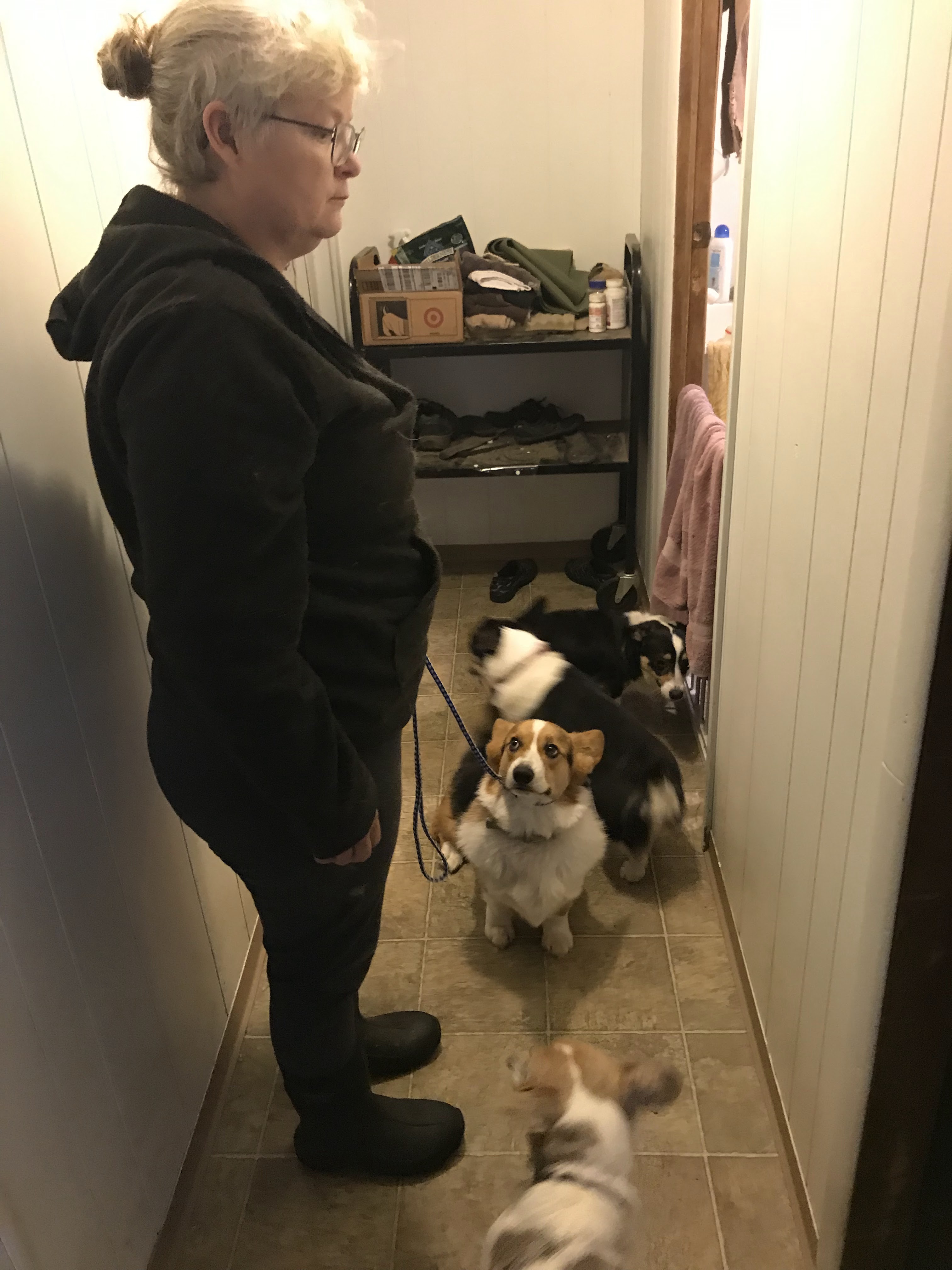
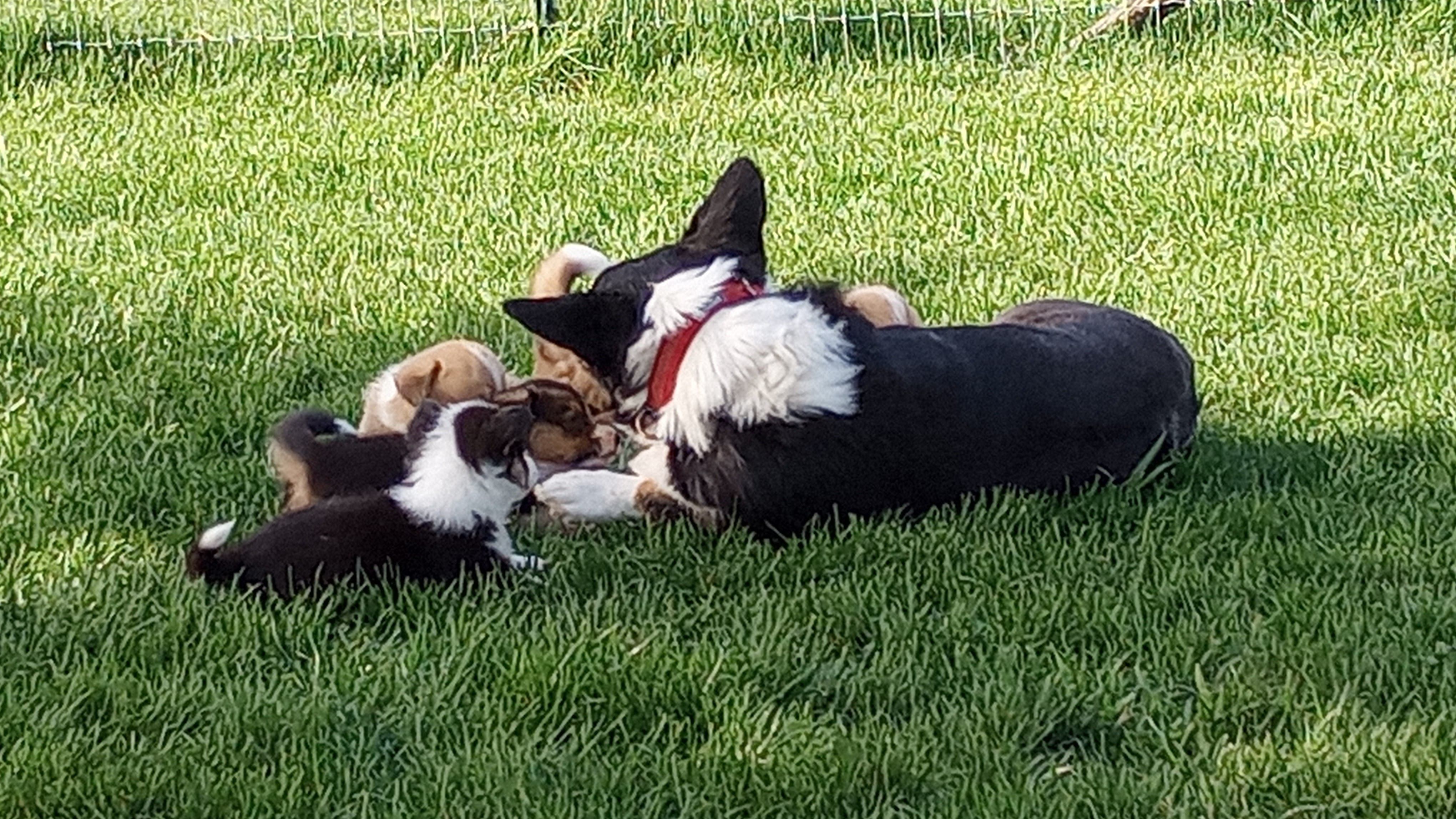
Samurai exhibiting calm compliance while his pack mills around him.


Everyone should always require Freddy to be calm before being fed, petted, taken for a walk, let out the door to go potty, etc. Mom must follow the rules also, she must make the corrections and follow through, otherwise Freddy will always be in control of the situation while Mom is around. Everyone must be consistent. Don’t share excited energy, don’t share aggressive energy. Always be calm confident with the dogs… and with people. There is more to this lesson, so don’t stay away. Come back soon and catch the next scene!

Do you have a scenario you’d like to see re-written? Drop us an email at corgicrazed@faerymountfarm.com and we’ll try to help!

Worse Case Scenario

First let me just say that this story does in fact have a very happy ending! Also, if you are squeamish, perhaps you might want to skip reading it.

No cone of shame here – she wore it like a crown!

Over the years, we’ve had a lot of dogs. We’ve had a lot of dogs that have been spayed, and since starting our Midwoofing, quite a few C-Sections. There is always a big risk when they cut open a dog’s abdomen. If you have your dog spayed, then they’ll be living in a cone for two weeks to protect them from hurting themselves. When you have a C-section, the mom has a job to do and a cone would keep her from caring for her puppies. Usually, the dog is so busy with her pups that she doesn’t have time to worry at the stitches in her abdomen. We watch them like a hawk and make sure they don’t run or jump. They have always healed up perfectly. Until River….

River had to have a C-section this last litter. She only had three babies and they grew too big for her to push out. The C-section went well and she was home and taking care of her two babies (one was stillborn) just like she should. We checked her incision regularly to look for signs of infection or of her licking herself. She was great! Sunday morning, just three days after her surgery, she threw up. Nothing to stress about, usually, but we had that feeling. Parents know that feeling – something is wrong with your kid but you don’t know what it is, just that it’s there.

We kept checking on her as we did morning chores – about every 15 minutes. I was filling up water when Liz yelled. I couldn’t hear the words, but I recognized the tone – it was bad, very bad! There’s blood all over the whelping box and River’s intestines are hanging out of her incision! We had no time to spare – her life was in serious jeopardy and we had to get her to the vet right NOW!

It was Sunday and the vet’s office was closed. We called the on-call vet – thankfully the vet we trust more than anyone else – but he was 40 minutes out on another emergency. Do you know how long 40 minutes is when you are sitting there holding your dog’s life in your hands? Literally? We’ve dealt with plenty of emergencies in our life, and aren’t prone to panic or to getting emotionally involved at the time. Crying is for later, after you’ve done everything possible. But I have to say – I was so scared! I was sitting in the dog hammock in the back seat of the Explorer with River’s back cradled against my legs and chest. One arm was holding her head and neck, the other hand was holding her intestines.

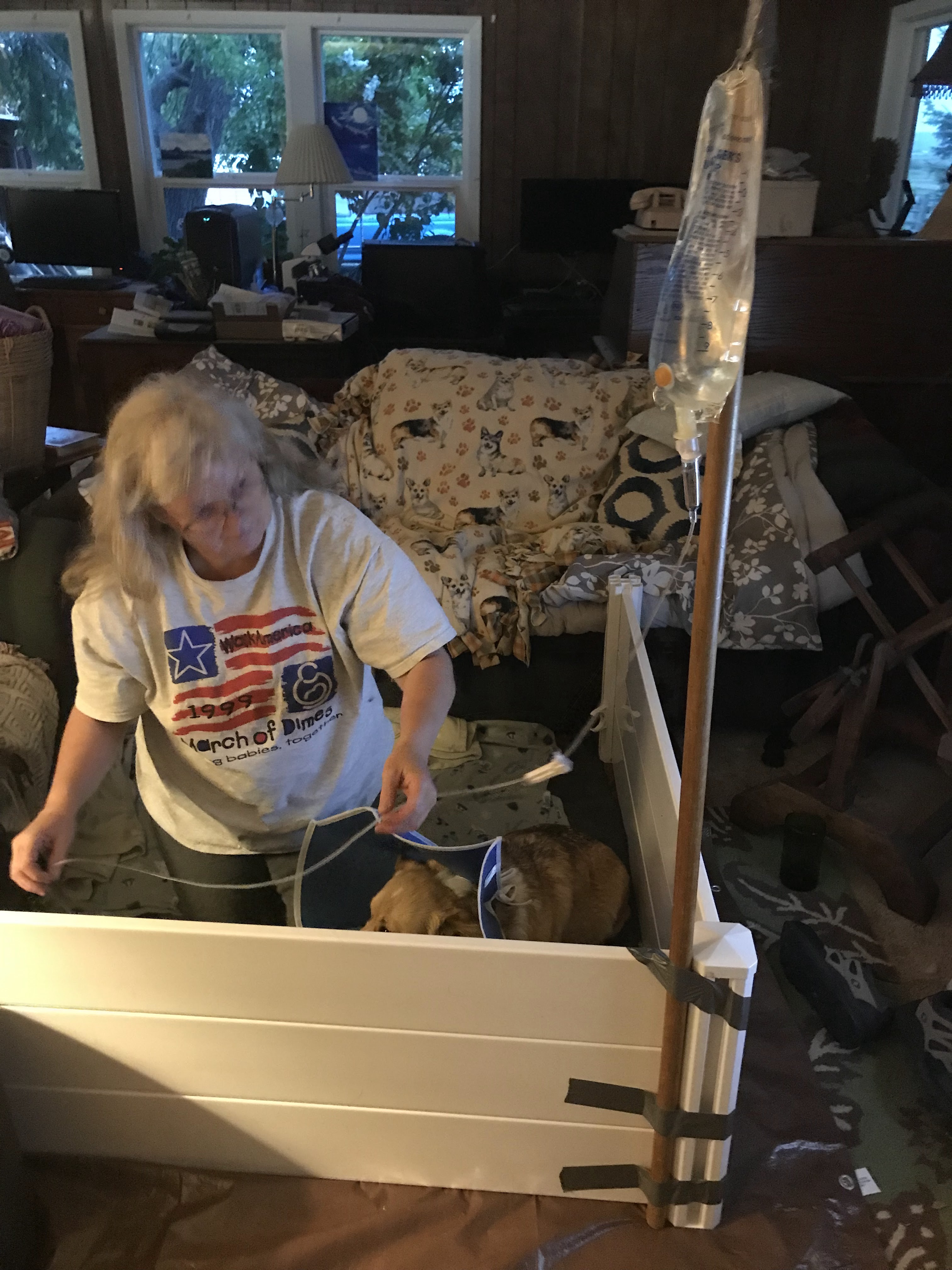
Clarity is an amazing advantage of adrenaline. What do we know about this sort of injury? The intestines need to be kept moist, clean, and as undisturbed as possible. Shock is a likely and life threatening. What can we do to minimize the trauma? A plastic bag and saline for the injury – yes, we put her guts in a plastic bag. And we started fluids for the shock. Subcutaneous, not IV. Liz does know how to set an IV and we have the necessary equipment, but she’s out of practice and didn’t want to blow a vein.

There we were, parked outside the vet clinic with poor River holding on. She was pretty out of it and we were so afraid she’d pass before the vet even arrived. Luckily, one of the vet tech’s arrived ahead of the vet and we were able to get her inside and prepped for surgery.

Improvise, Adapt, Overcome – we didn’t have a hanger for the fluids, so we made one!
River came through surgery surprisingly well. The vet said we probably saved her life by our actions before he arrived. Normally they would want the dog under 24 hours of observation, but the closest clinic offering that service was a long ways off. We brought her home and took turns staying up with her all night. She was still on fluids and lots of drugs. And she was in a cone, of course. We felt so very lucky in so many ways! She could have died – would have died – if we hadn’t caught it so quick! Chanel only had the two puppies and she had plenty of milk to share with River’s two boys. And we have a really awesome vet!

It’s been two weeks now. River had to wear the cone and be on very limited activity, which drove her nuts after just a few days! She’s officially cone-less today and feeling great! We’ll slowly increase her activity level, but she’s out of the woods and ready to play!

Happy to be here!

There is no such thing as too much stuff in your first aid/trauma kit! Remember that and don’t skimp on the plastic wrap! (which is what we’d have used instead of a bag if we had had any!)
The Tree Litter’s first Excursion

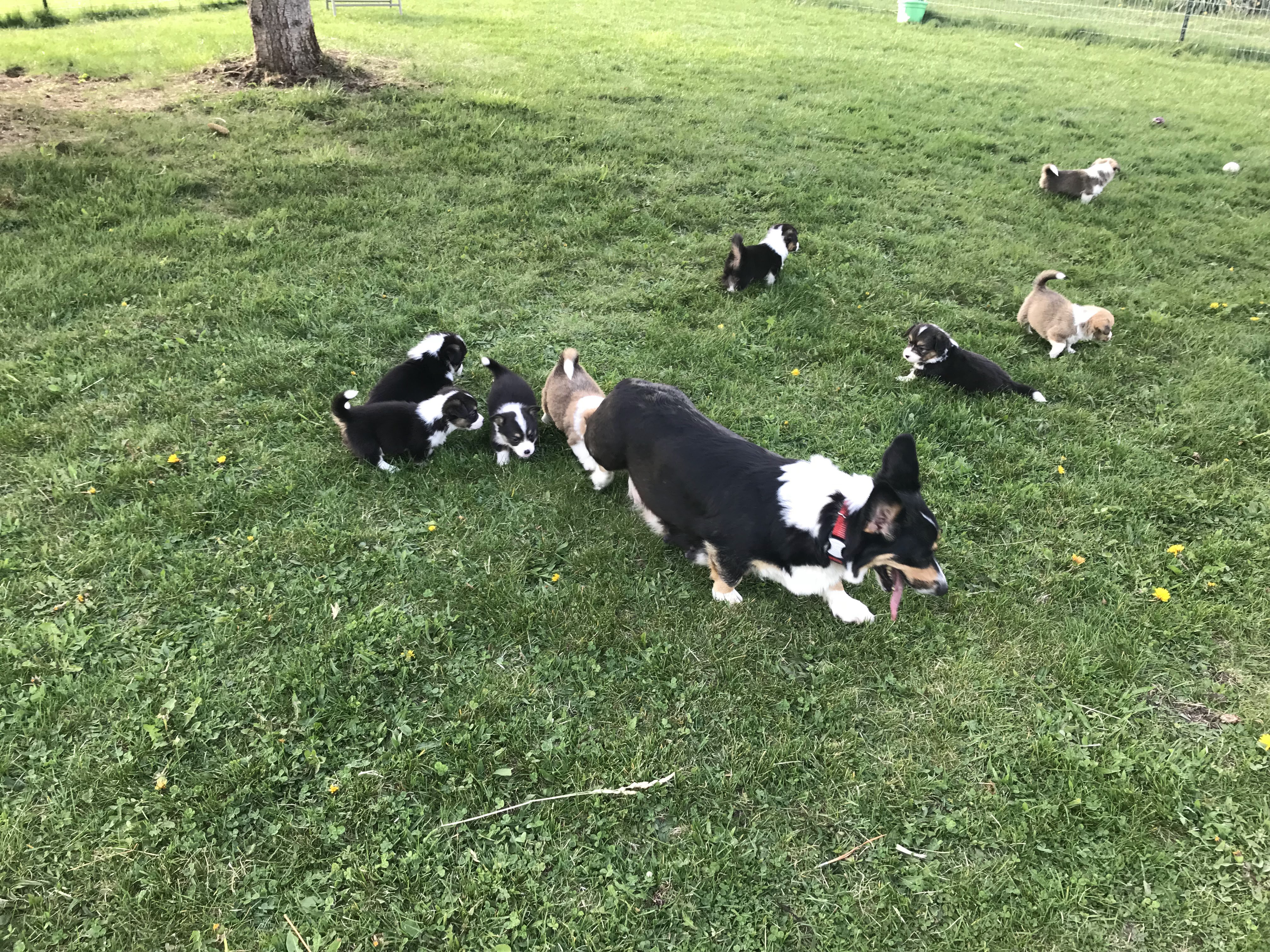
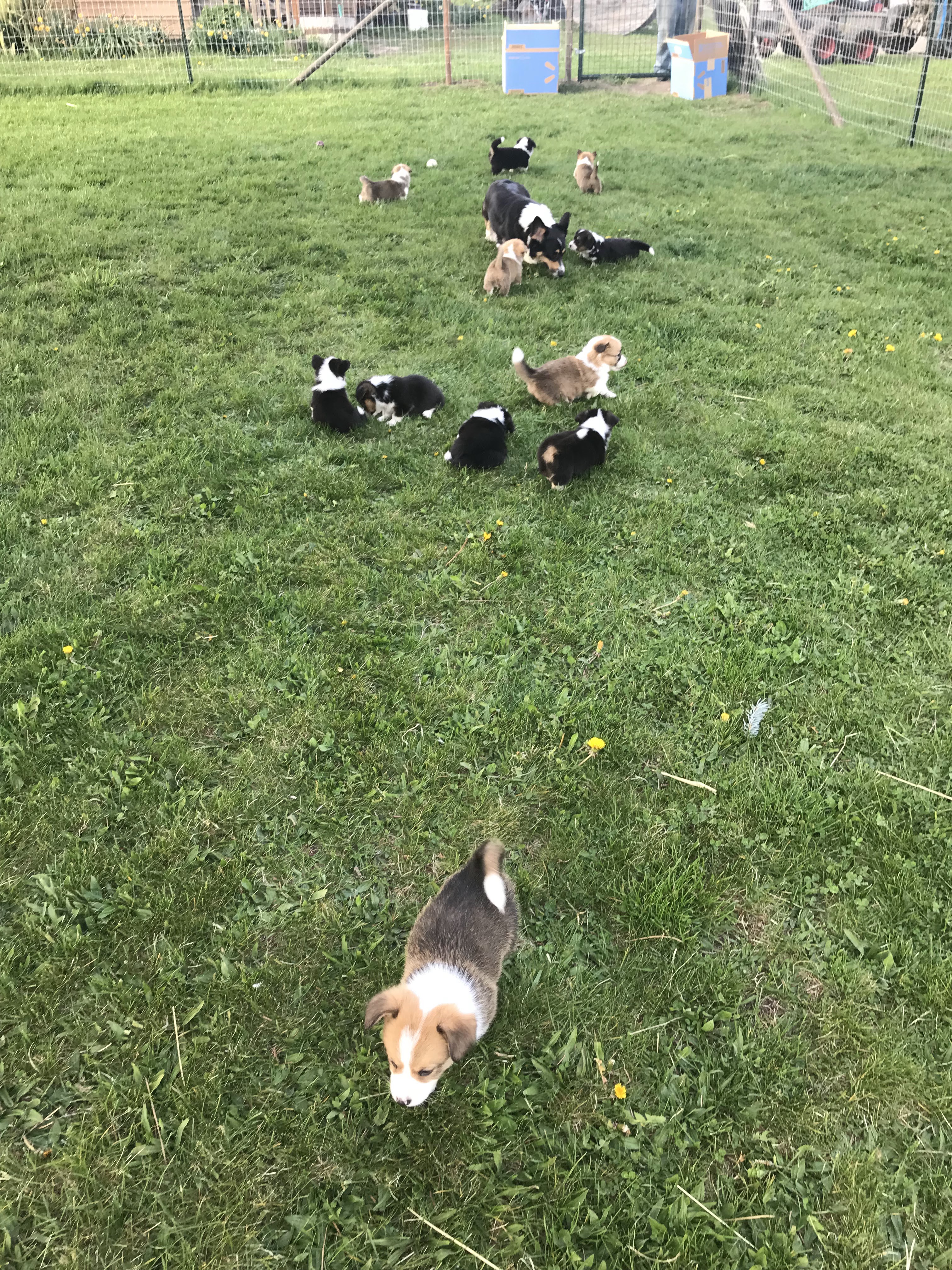
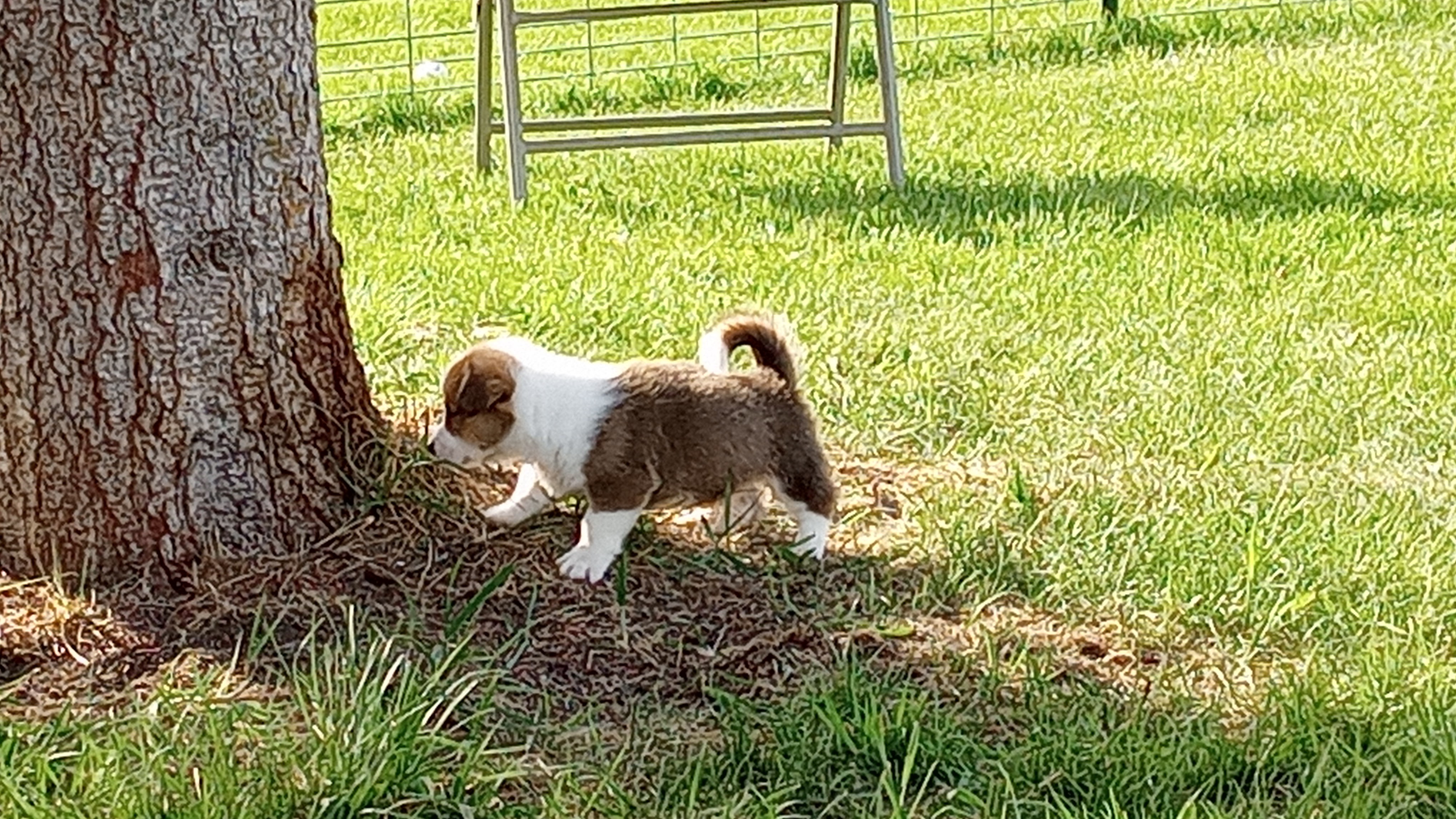
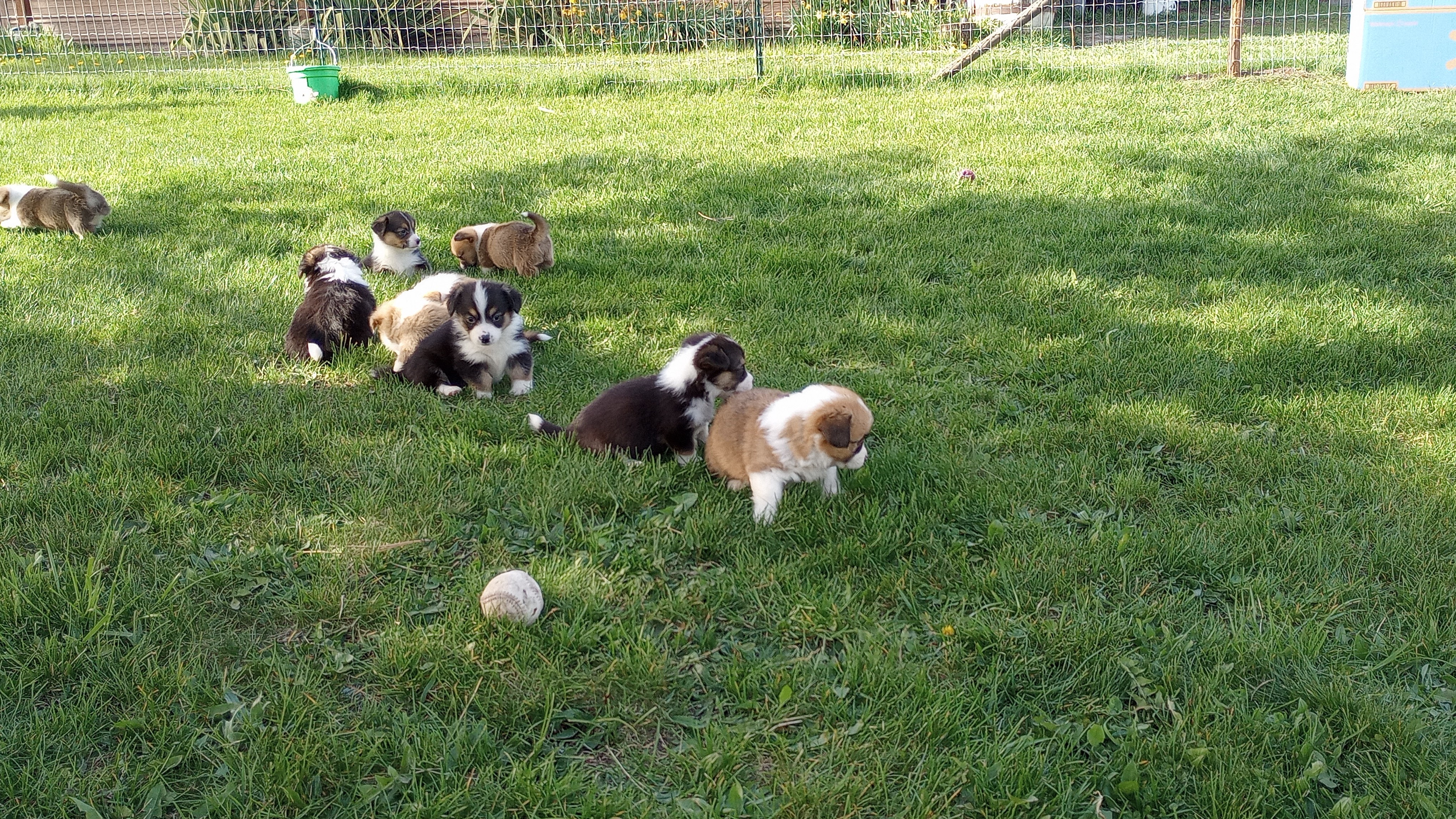
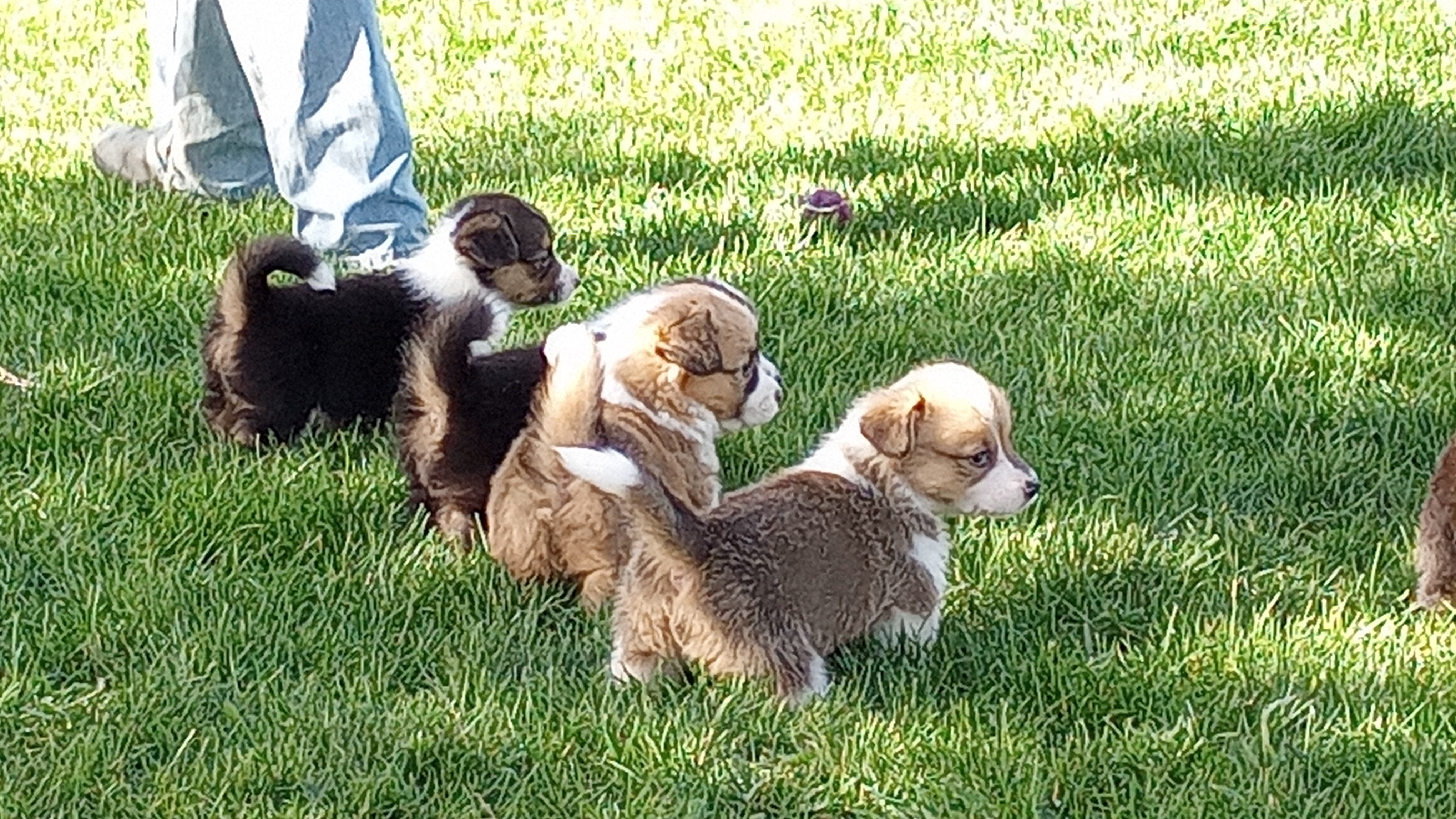
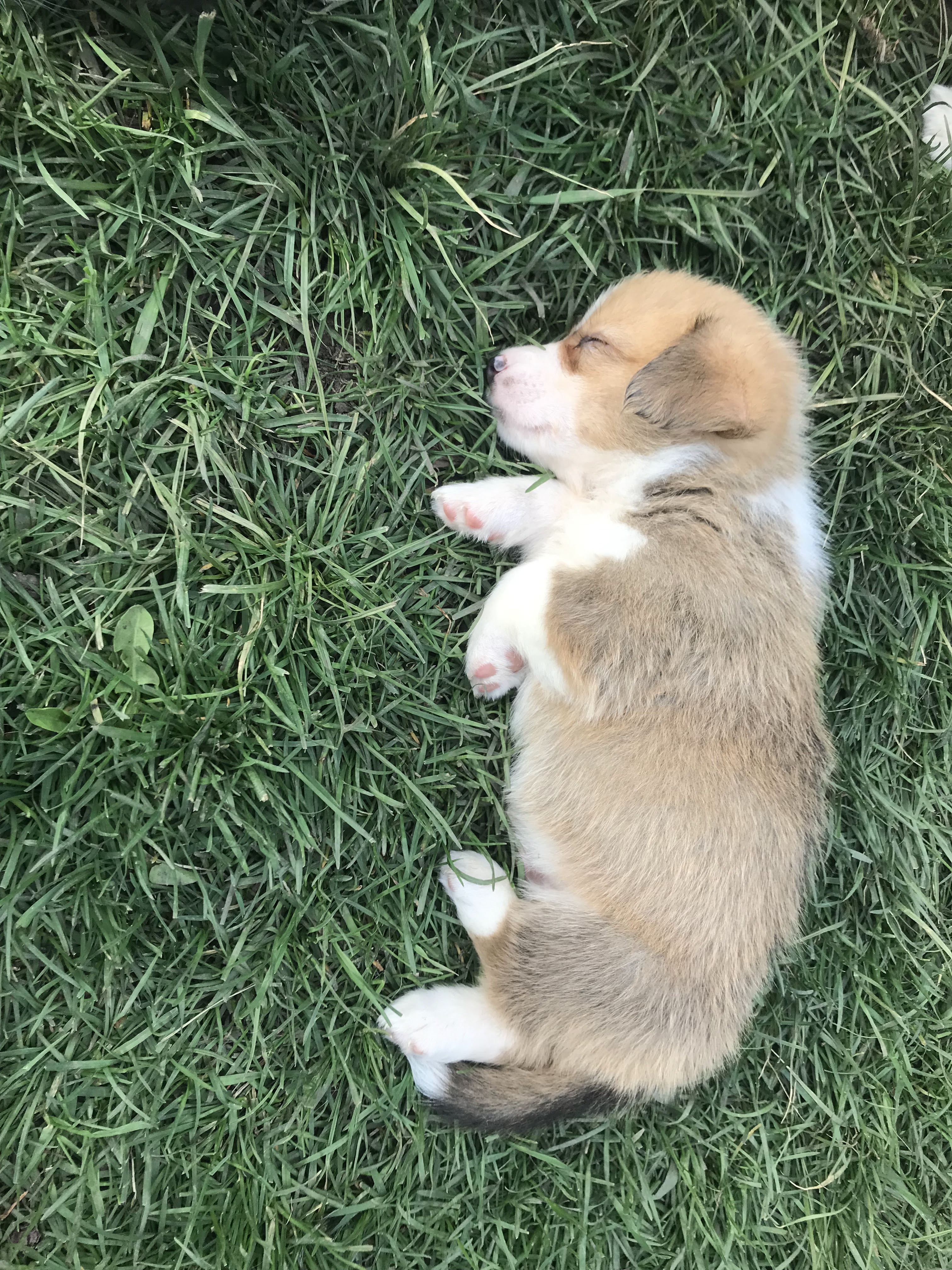
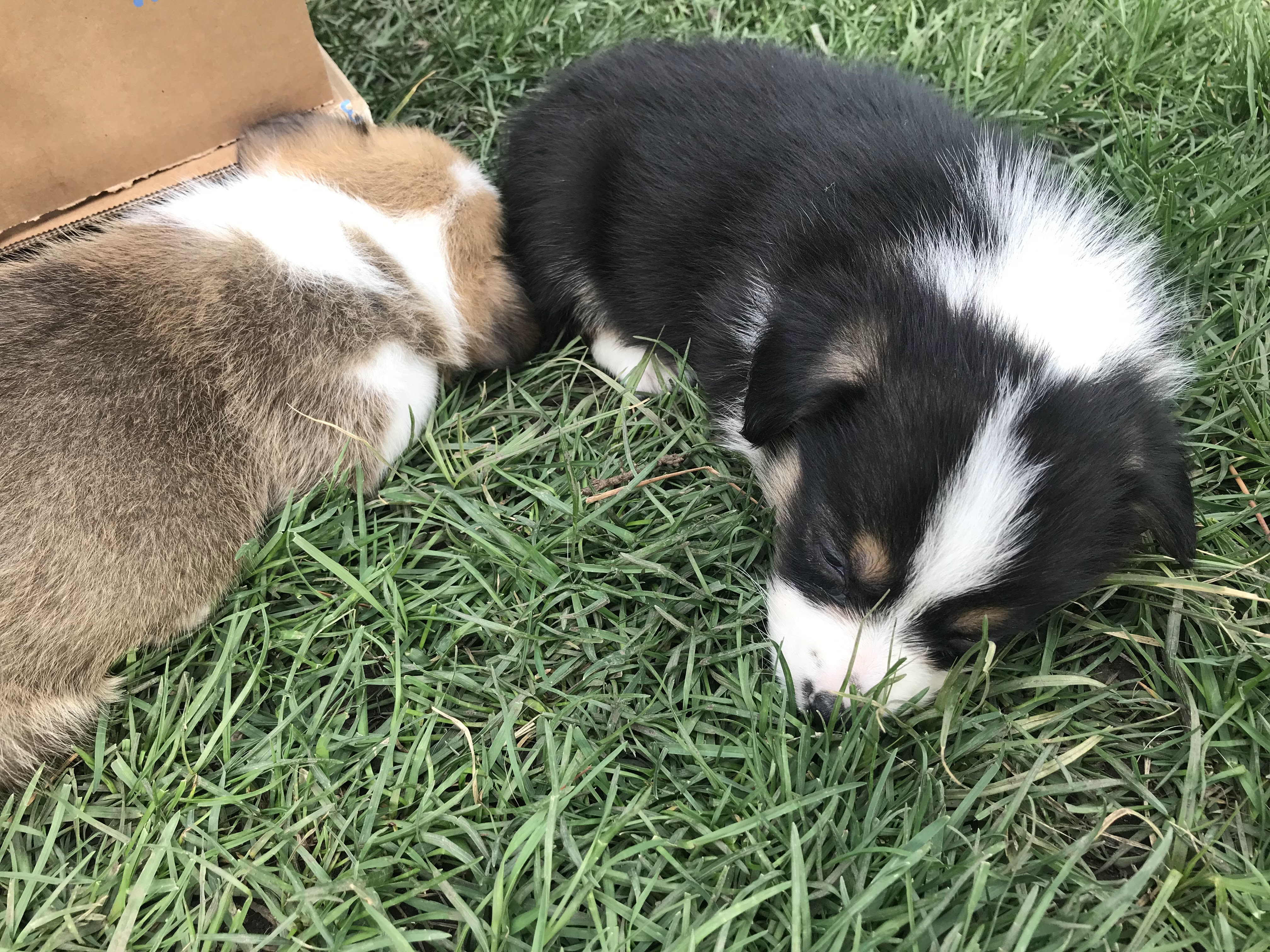
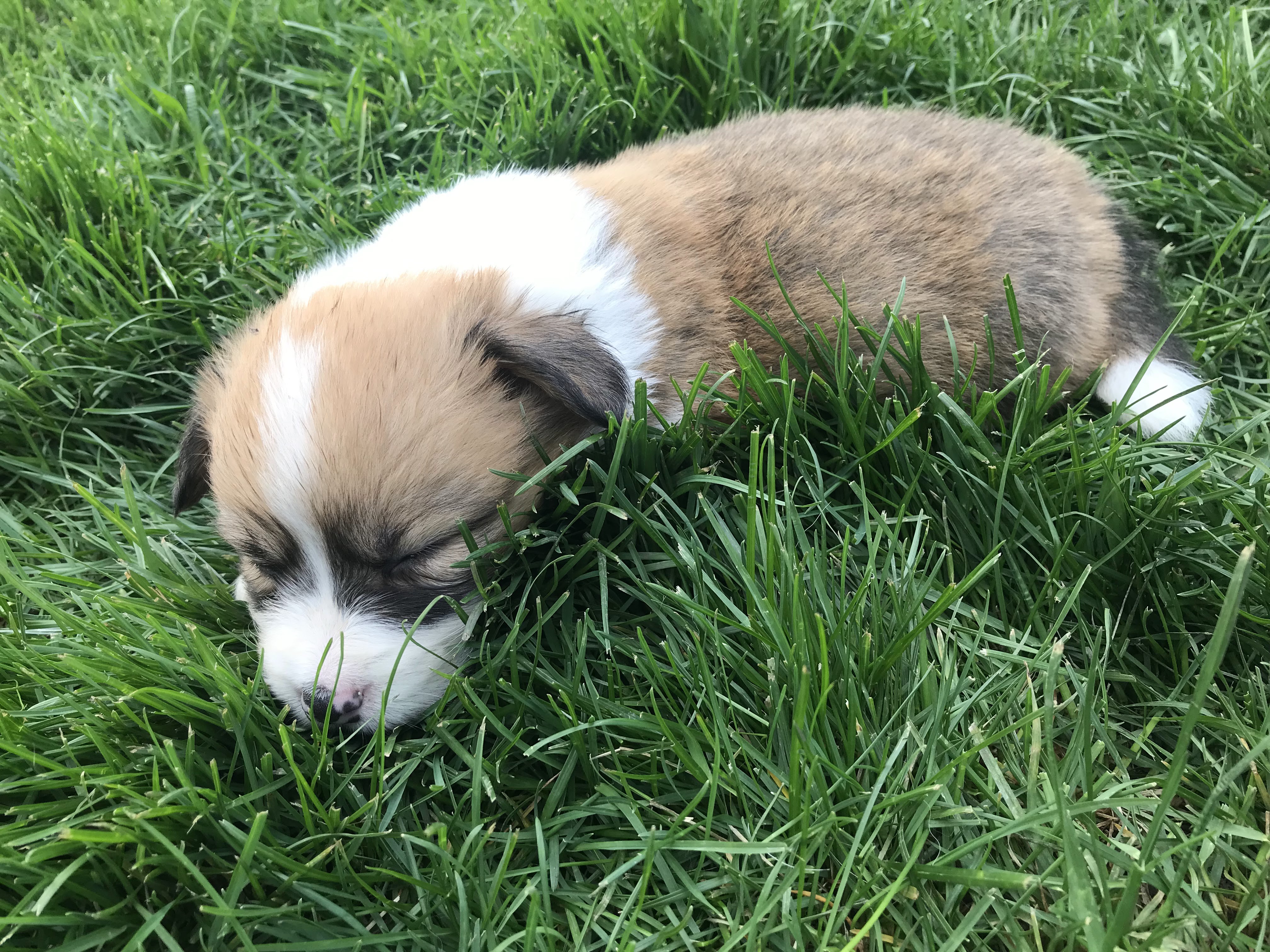
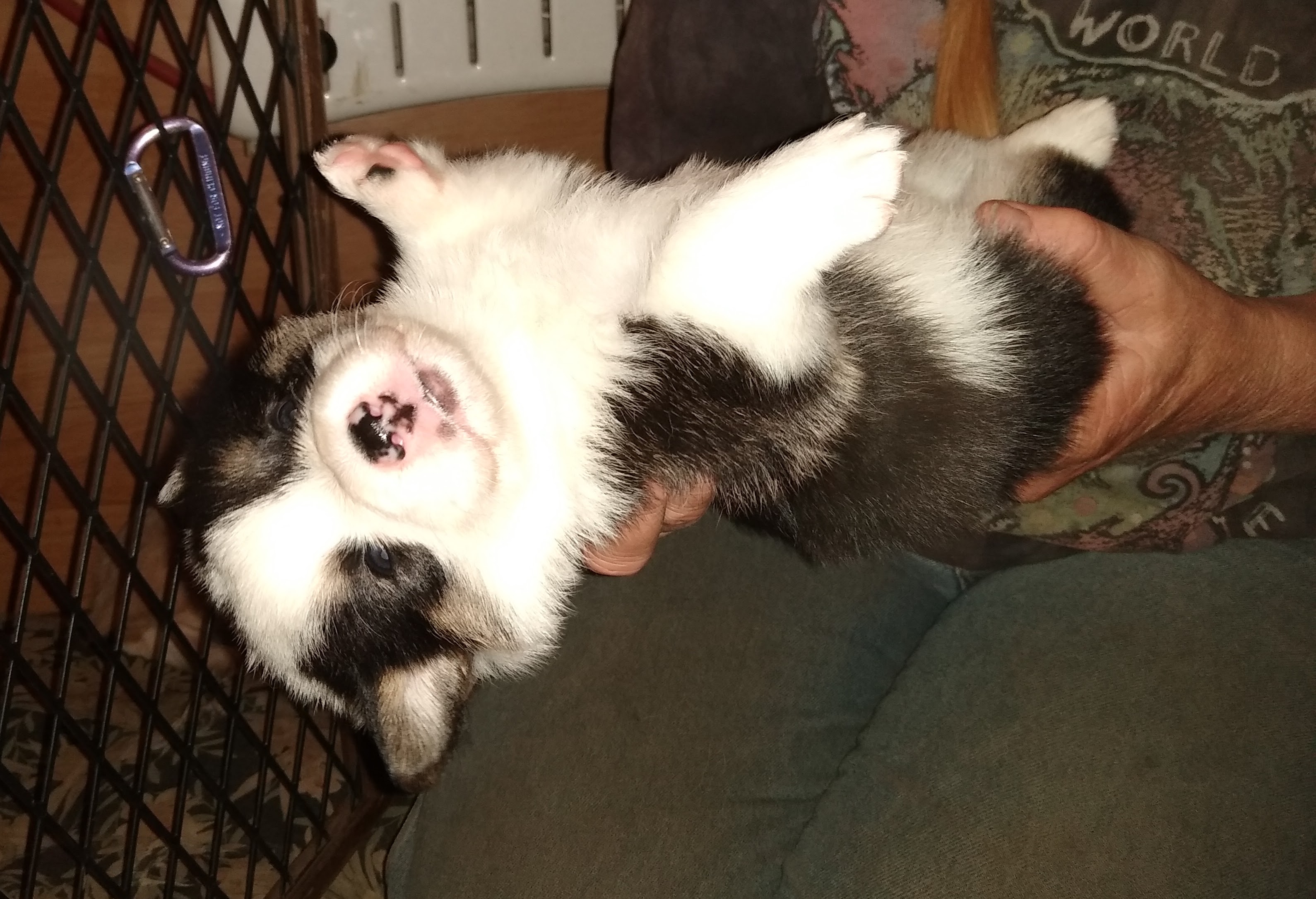
Yesterday was a lovely day and we decided it was high time to pack the little fuzz balls out to the grass! They were utterly fearless in their new surroundings. Munchie was delighted and got a little ball playing in while her puppies were busy. We took about a million pictures and videos. A great time was had by all – followed by some serious napping (for the four leggeds, not the two leggeds, unfortunately!)!

Munchie and Swagger’s Pups at Four Weeks Old

Time flies and puppies grow up SO fast!

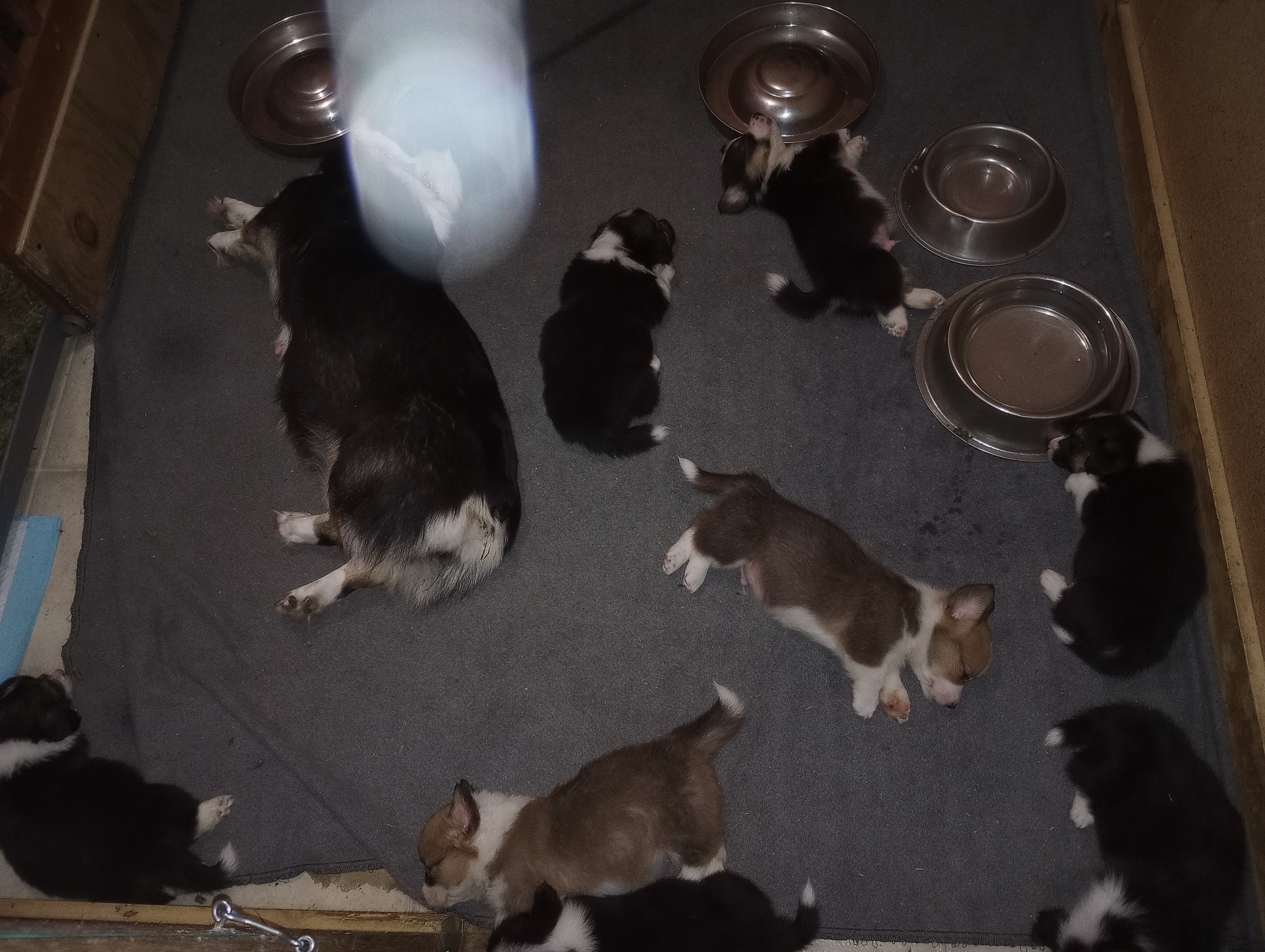
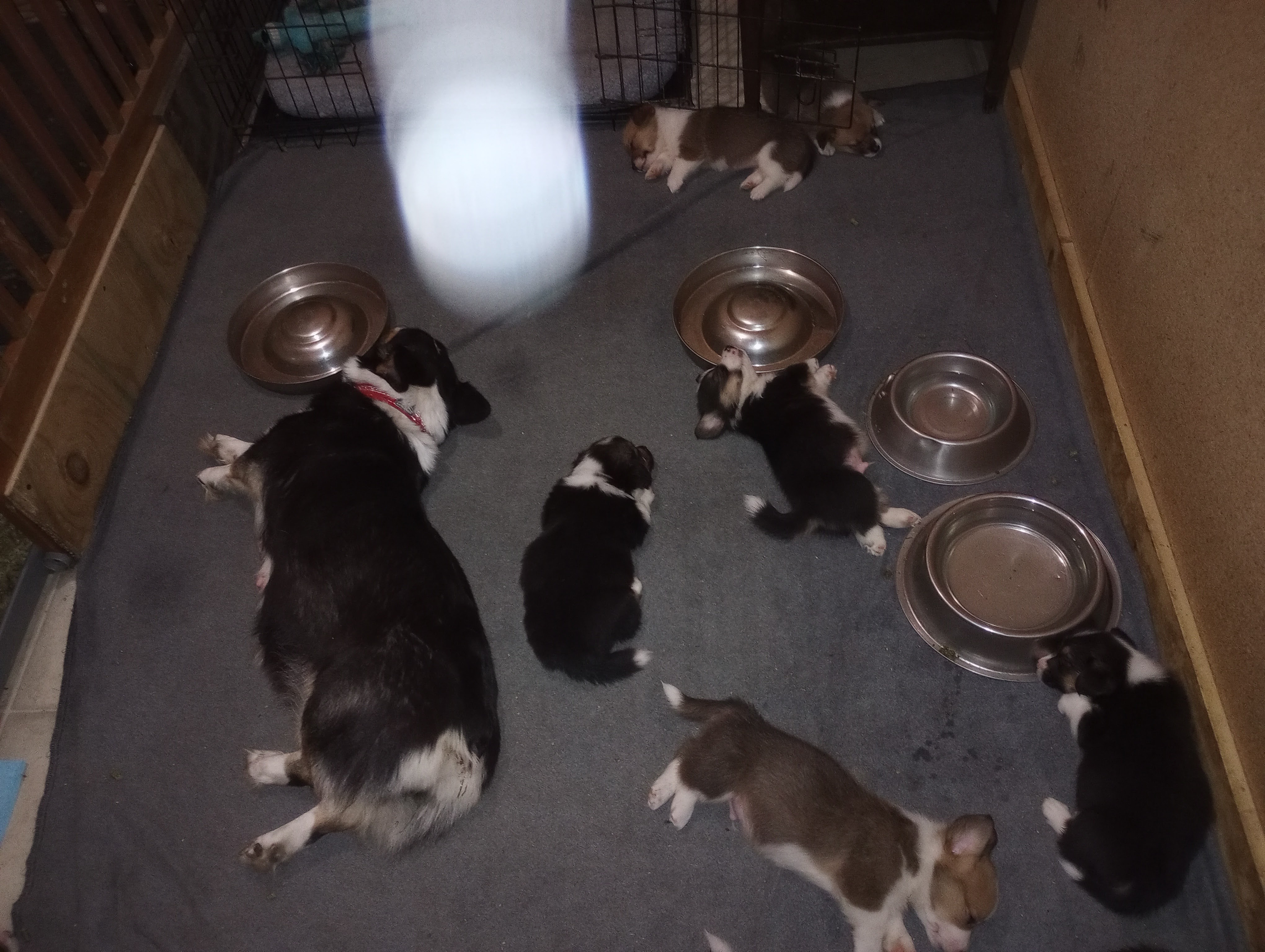
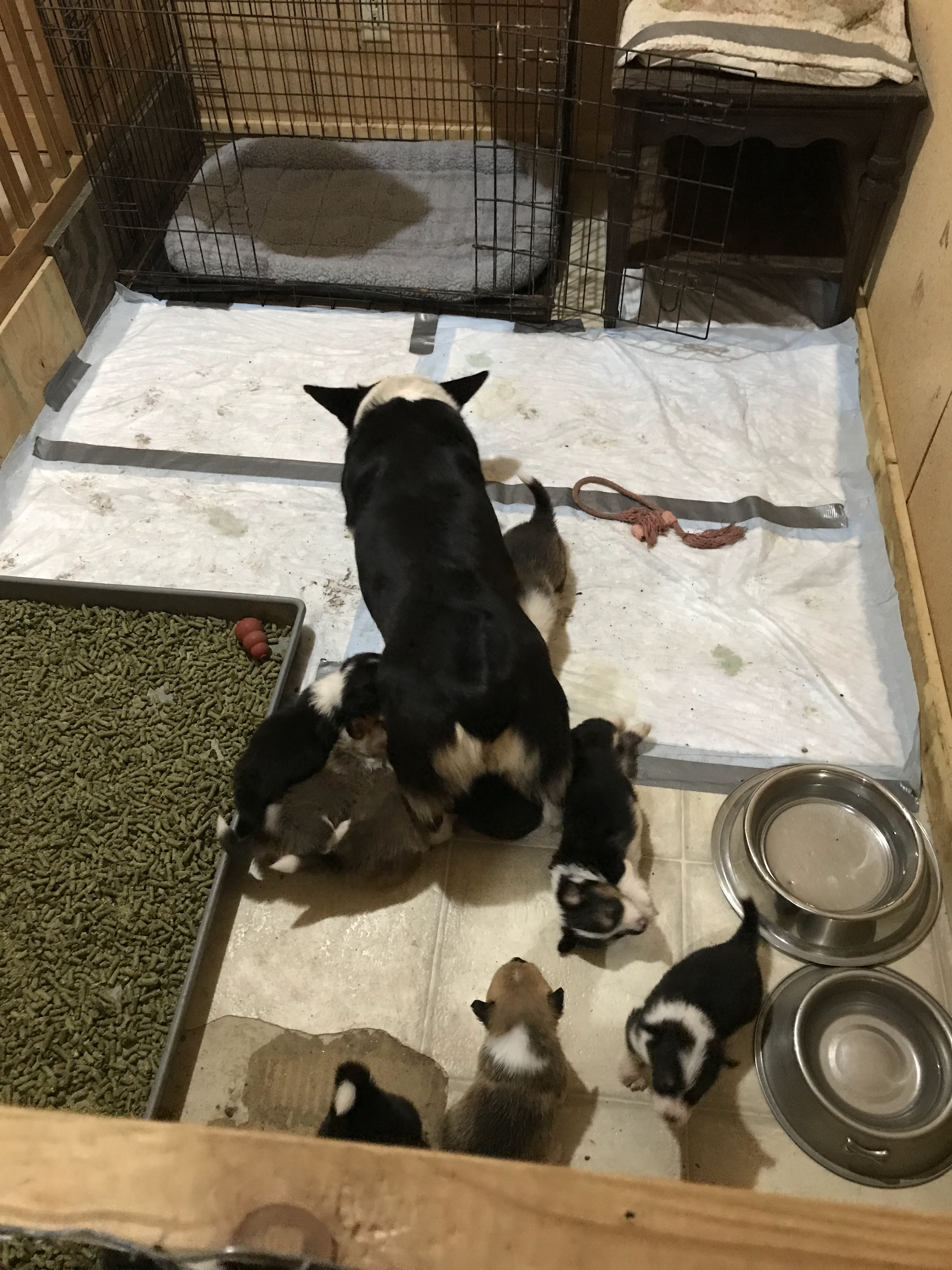
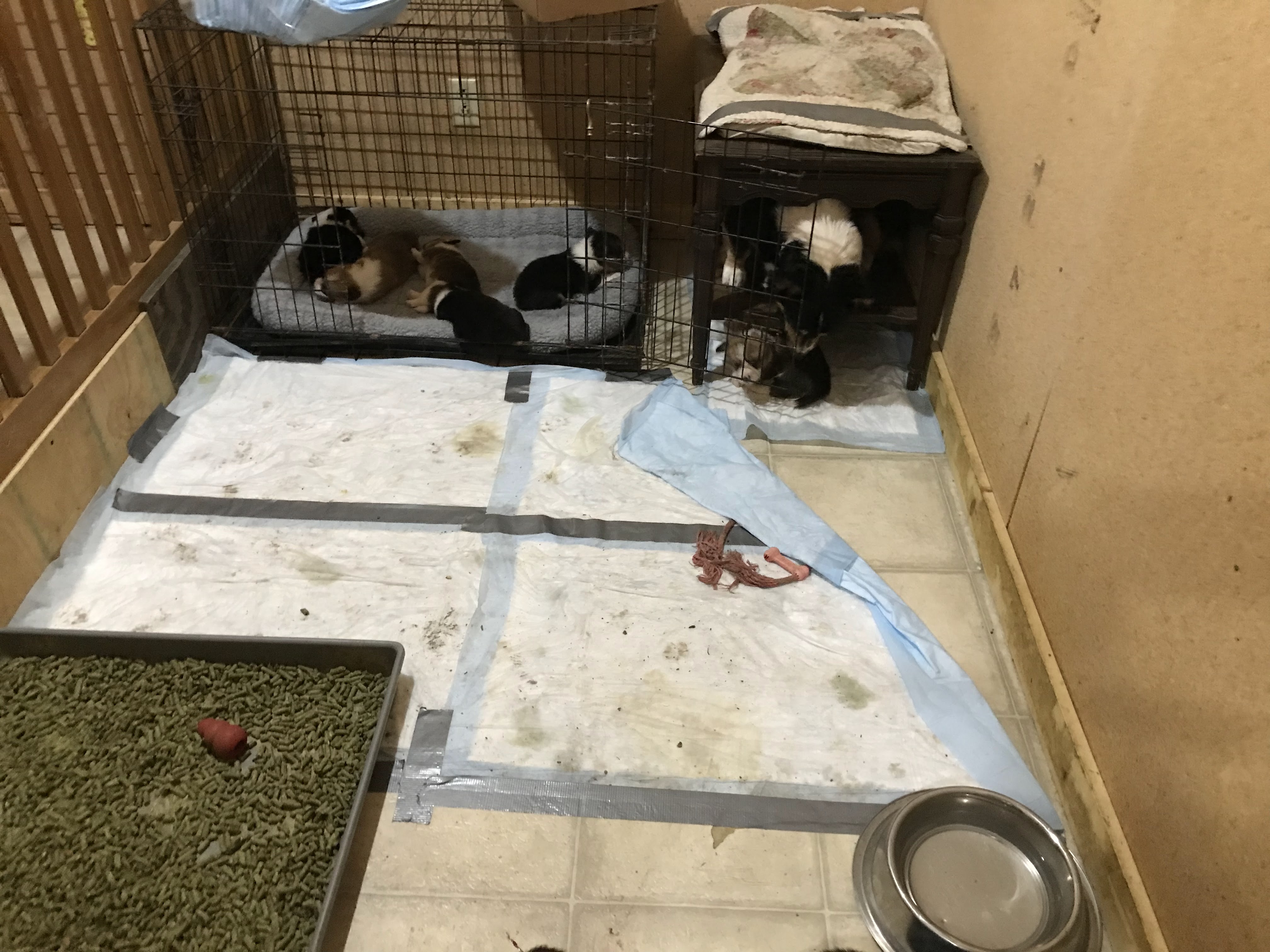
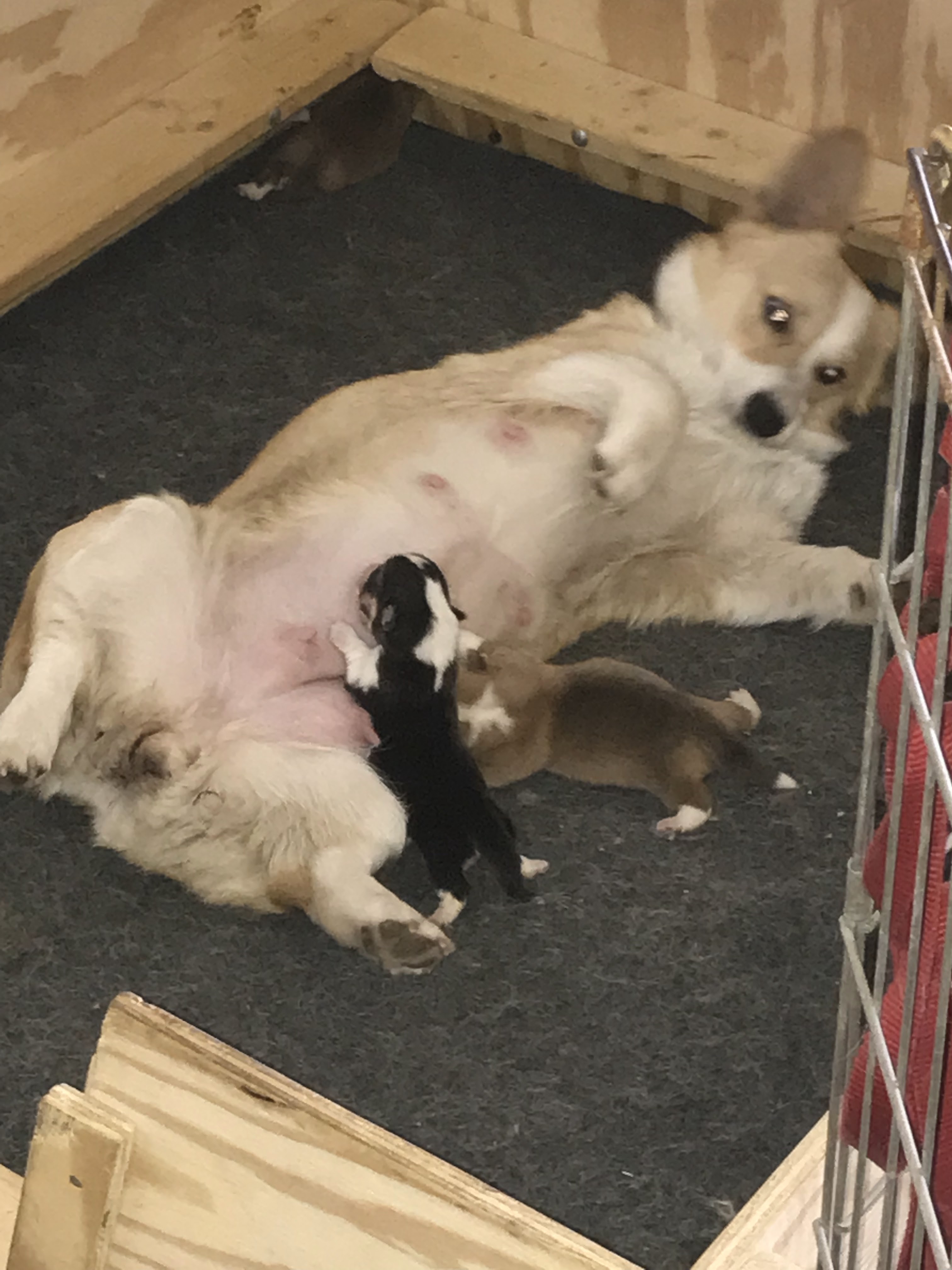
The tree litter is four weeks old now. They are very mobile and adventurous. We just moved them to the puppy room so they can have more room to play and grow. Here they are introduced to the litter box, which will make keeping them clean easier for both us and mom. They are having a great time checking everything out. They are old enough to start playing with toys and experiencing their world a bit. If we can get some warm weather they’ll get to start venturing outdoors a little bit.

Moving in and settling in for a nap!

Munchie’s Puppies Learning to Lap

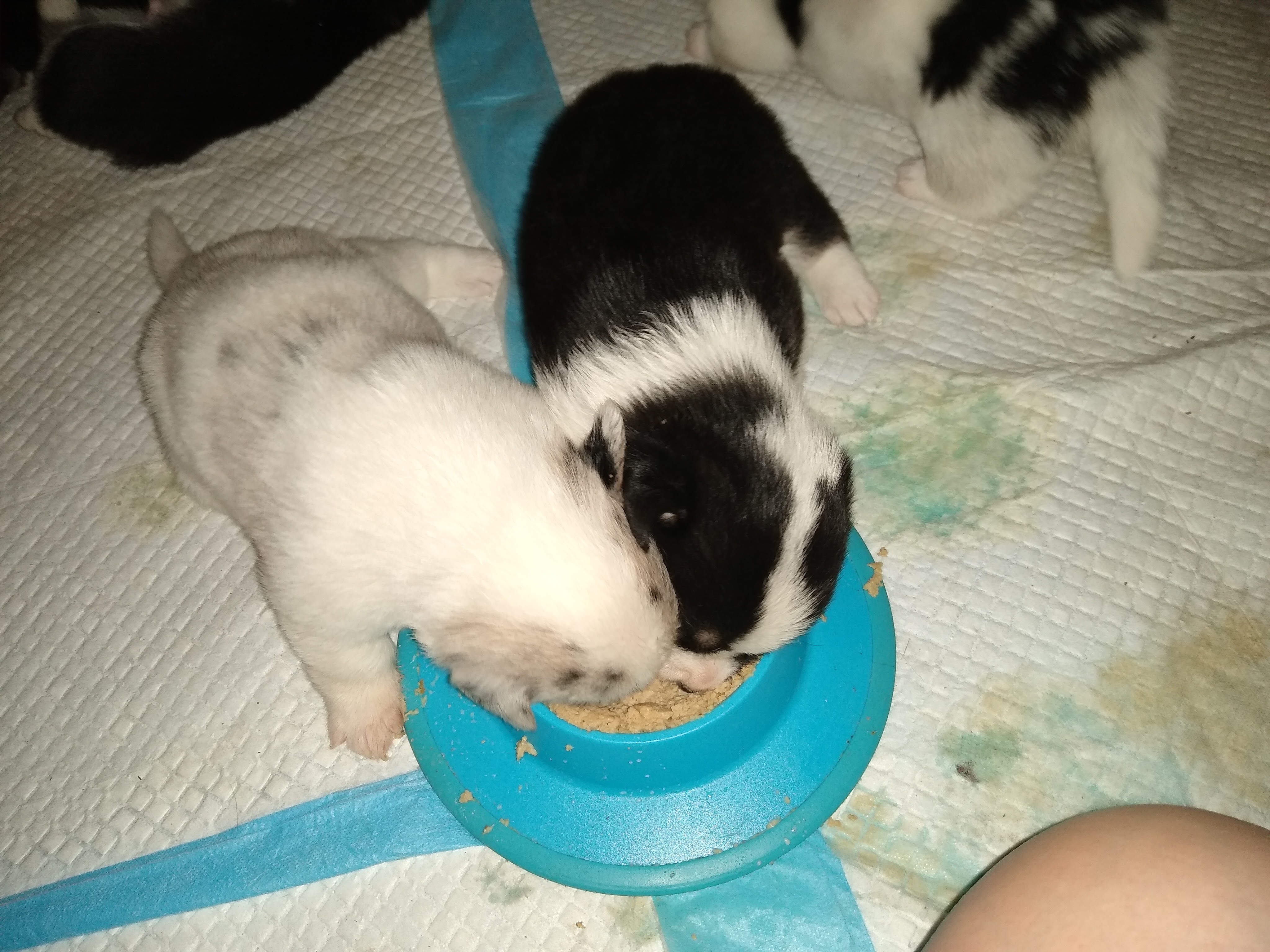
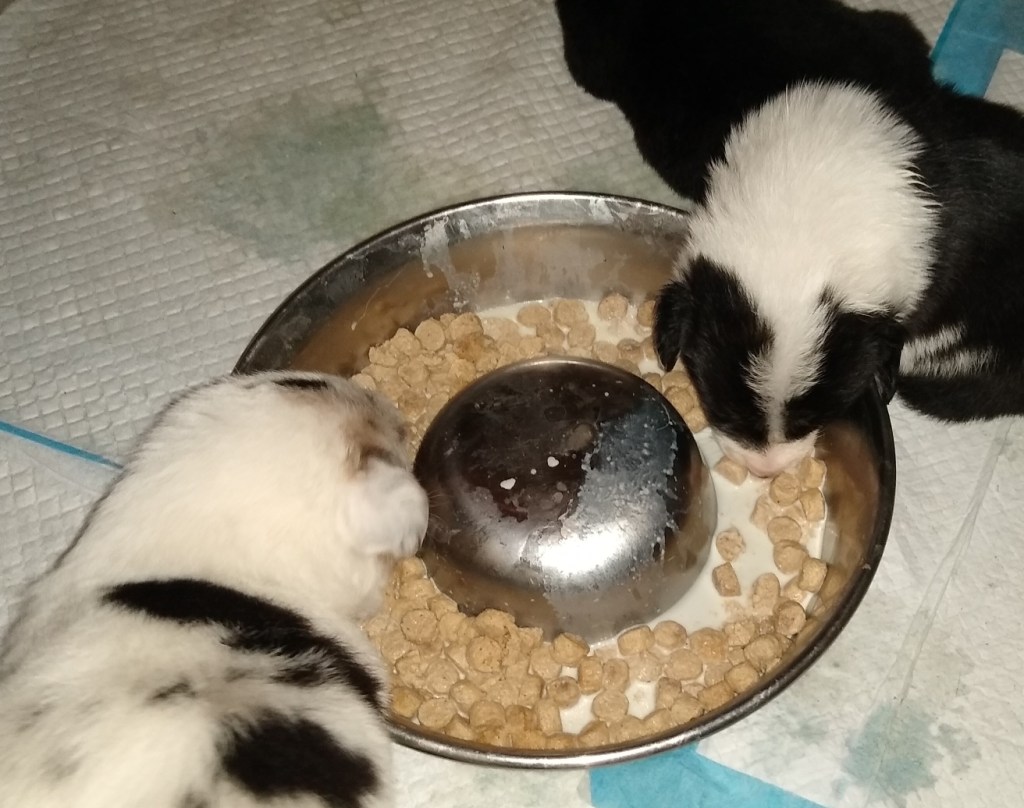
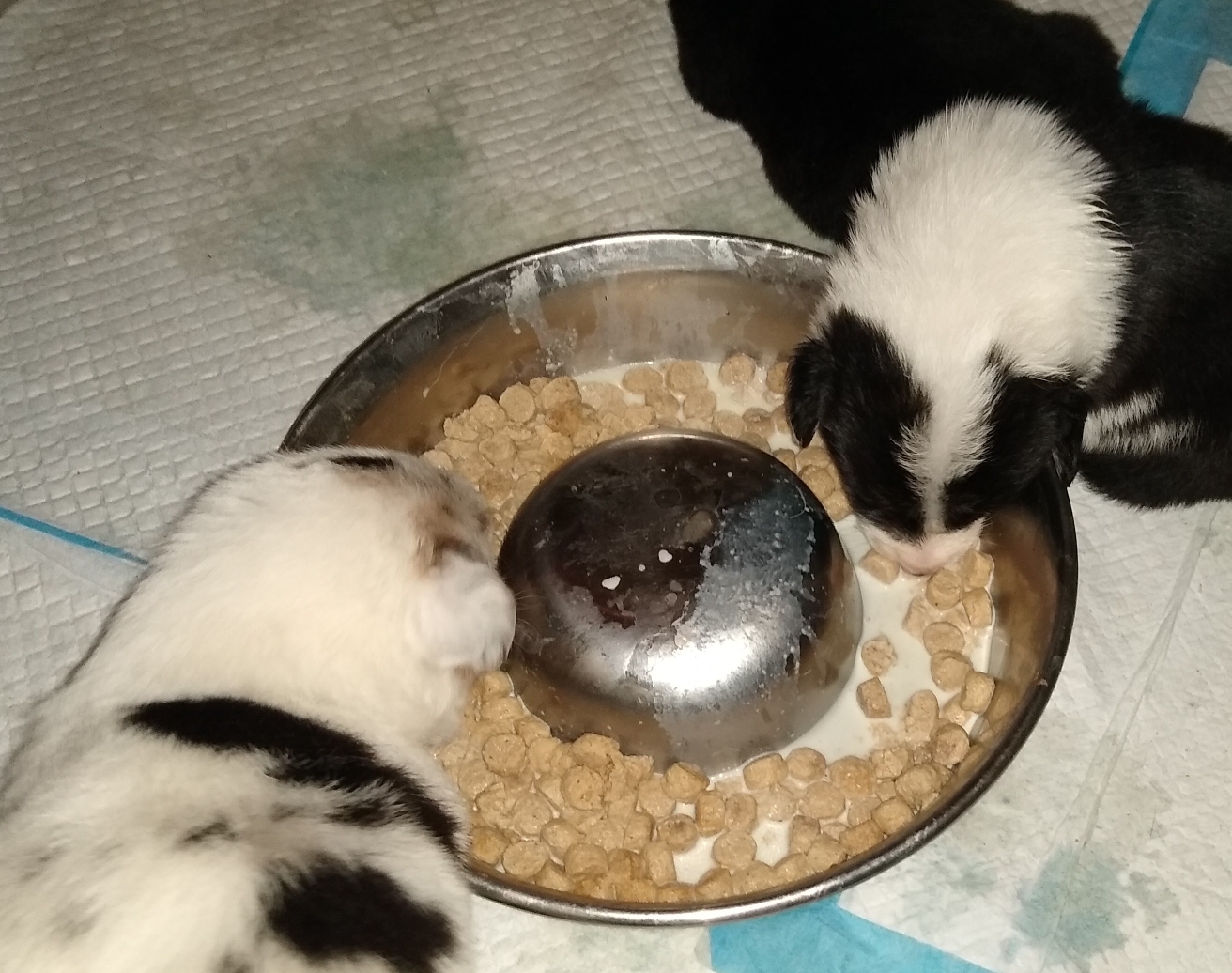
Munchie’s pups’ eyes are open now and since we’ve been bottle feeding to supplement them all this time, we are now transitioning them to lapping milk. It gets everywhere at this stage! They walk in it, lay in it, walk on each other after walking in it…. They suck it off the side of the dish, their own feet, and each other’s faces! It looks like the aftermath of a milk hurricane! Thankfully, Munchie is happy to clean up every one after.

Tonight we will start soaking some kibble in the milk and make a gruel. Munch will have a hard time keeping up with the puppies growing nutritional needs, so the sooner we can get them eating, the better. With smaller litters, we simply wait until the pups join mom at the food dish and start eating on their own.

From bottle to pan – what a mess!

Tube Feeding little Specs

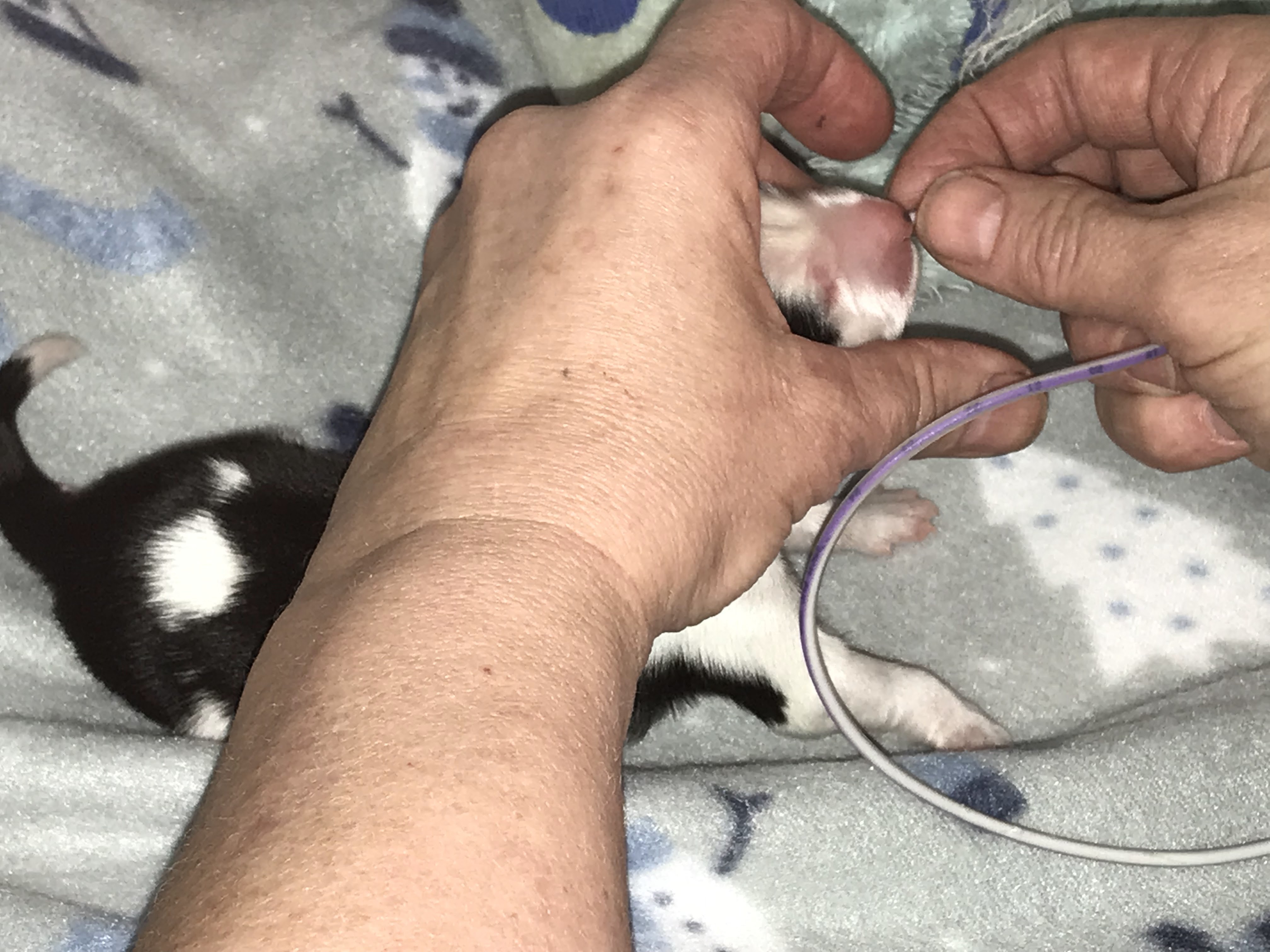
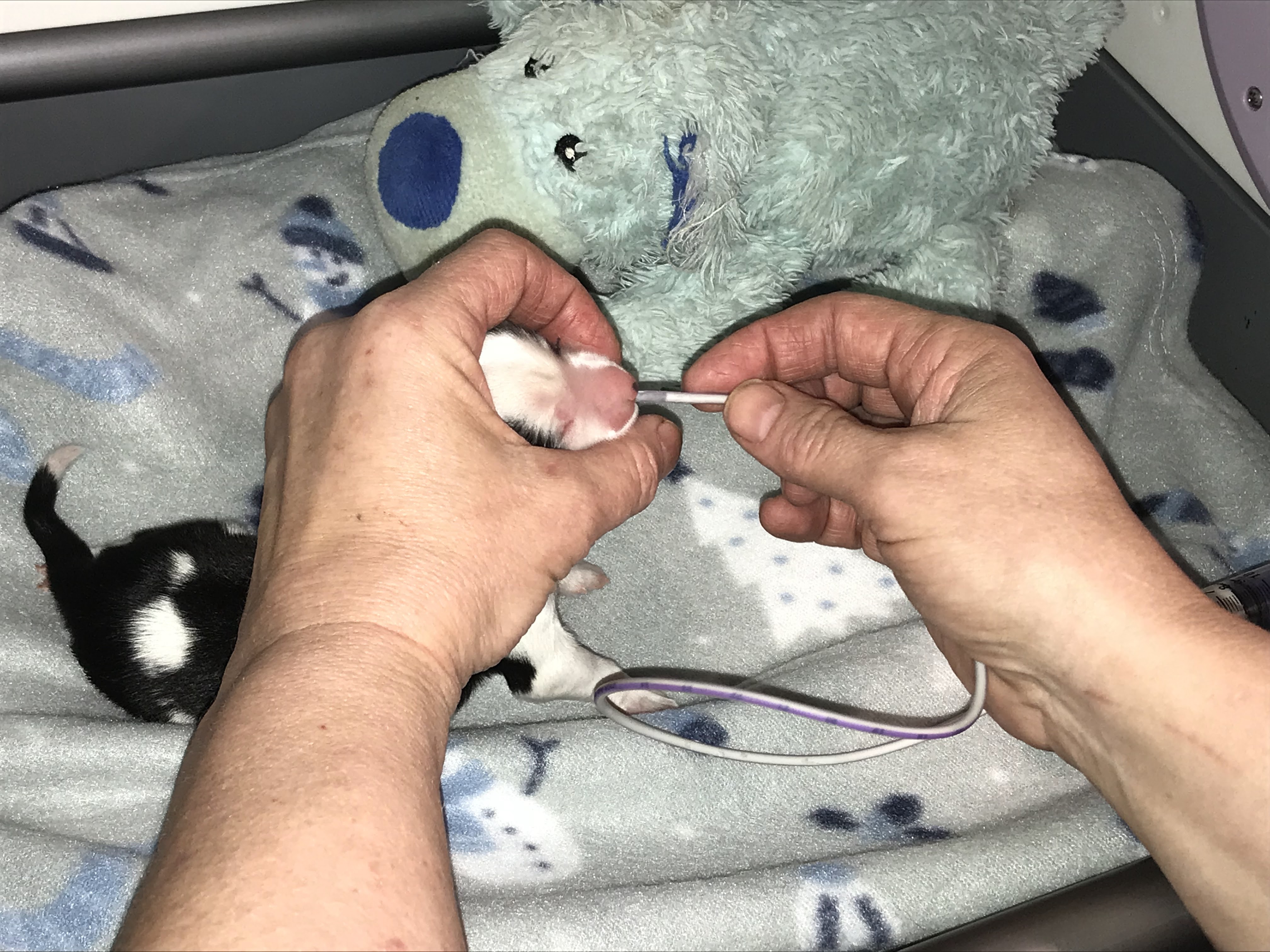
Little Specs is doing well. Here’s some pictures of her getting pottied (in case you didn’t know, very young puppies can’t do that on their own!) and tube fed. She doesn’t have good “suck” which means she can’t latch onto mom’s teat and get milk out very well. We help her along with the stomach tube which is safer than a baby bottle for puppies in her condition. She is currently spending most of her time in the incubator, but we put her in with her litter mates periodically for the comfort and socialization that provides.

Her legs are already improving! She pulls them both forward and is walking on her knees. This shows us her hip muscling and joints are in good shape and is certainly encouraging!

Not up to Spec

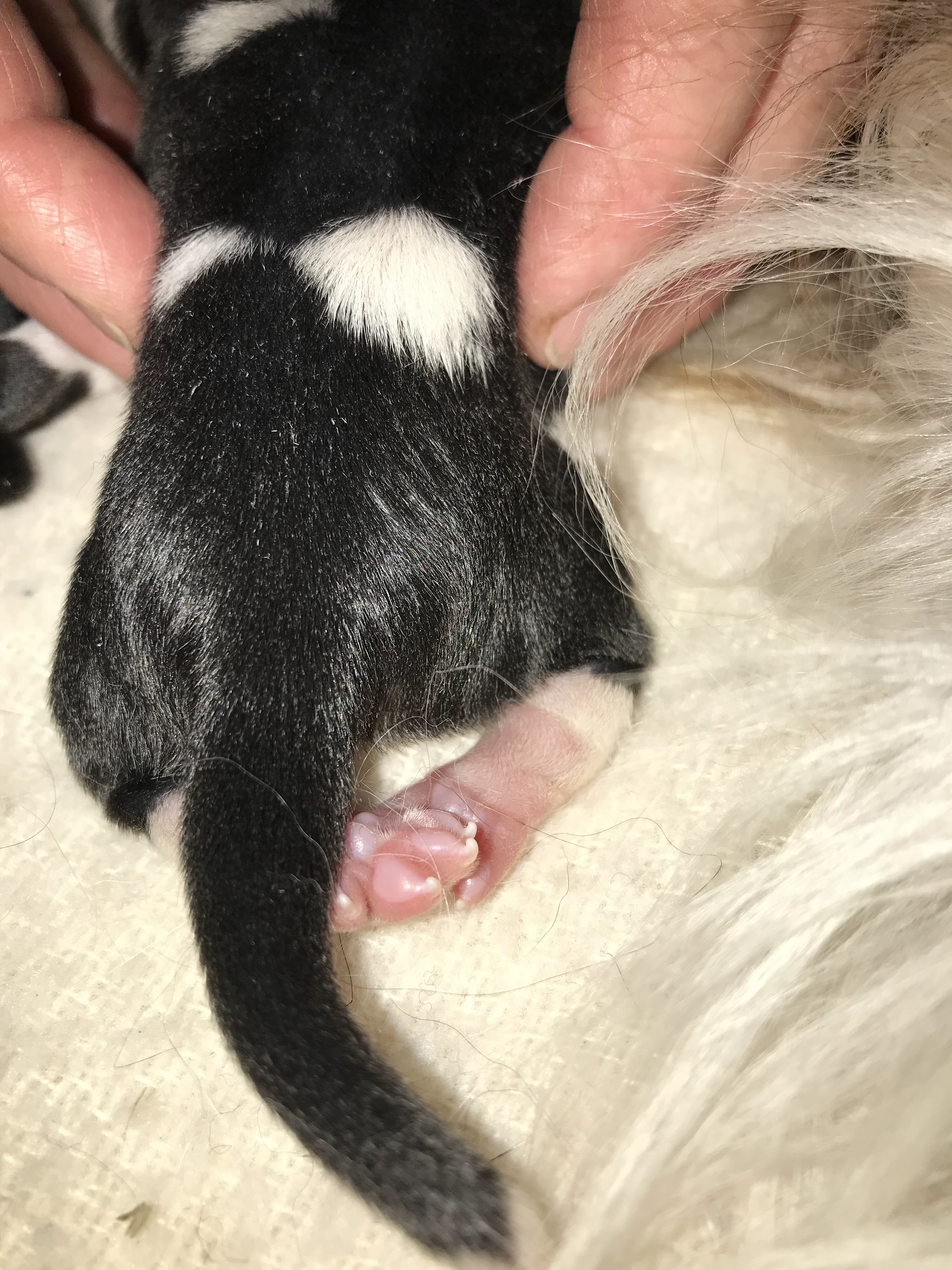
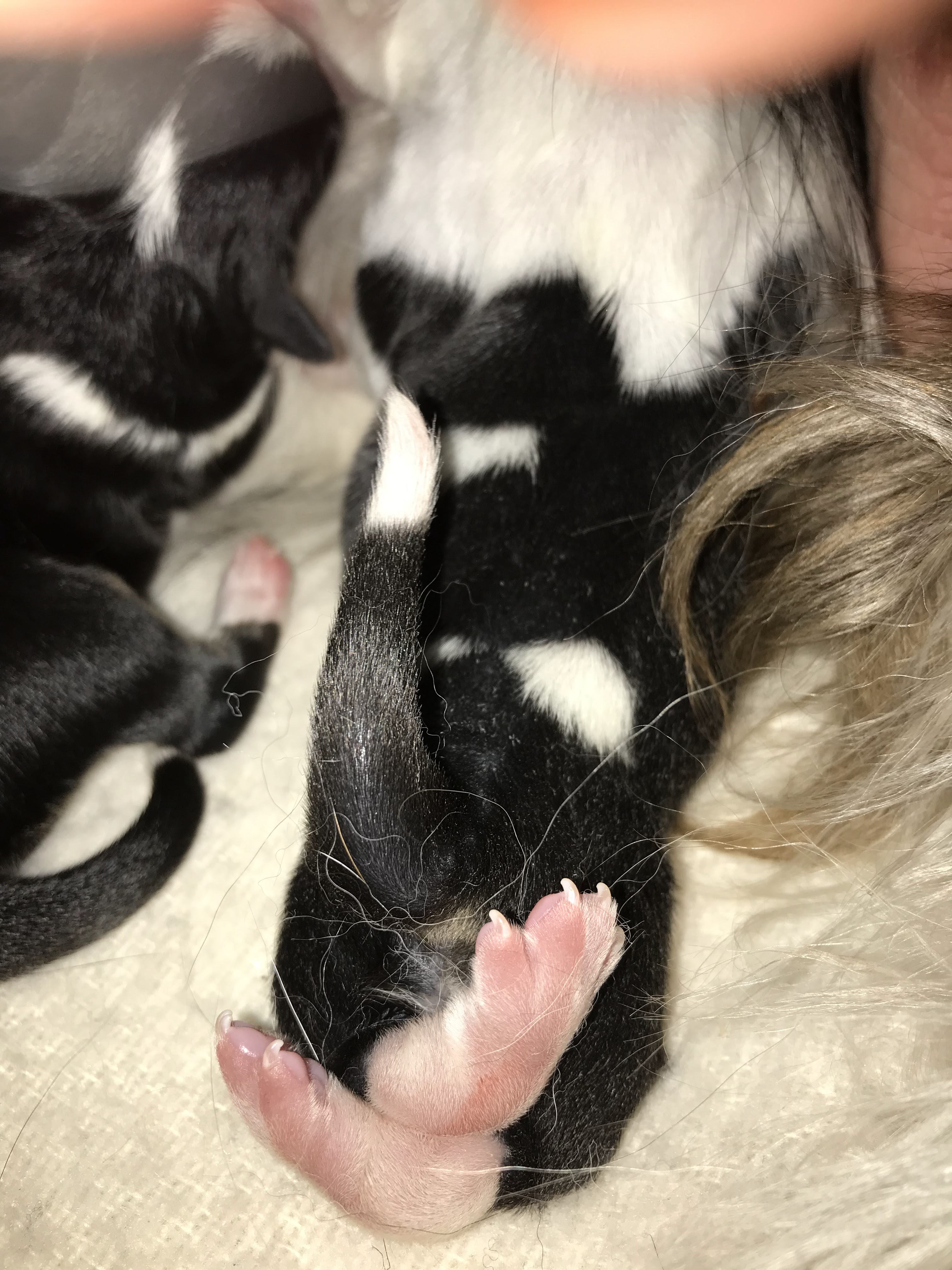
Yesterday we had a litter born and for the first time ever, there was a puppy with a deformity. We were devastated, especially when the vet’s initial assessment was that there was nothing we could do. Her back feet point the wrong way and are bowed. This usually happens as a result of crowding in the uterus and is not genetic.

We gave her the baby name of Spunky Specs because she wants to live and she’s not quite up to spec! She started physical therapy immediately. We are stretching and moving her legs very gently and pulling them as close as possible to the proper position. She can move them and does pull one leg forward on her own, so we are hopeful that the legs will straighten out and normalize with time.

For now she has a hard time getting into mom’s milk with her brothers and sisters and tends to get cold, so we’ve moved her to the incubator and will tube feed her as needed. She needs the colostrum from mom, so will be spending some supervised nursing time with Skyla. We will try hard to keep you updated on her progress. She is not our first “hopeless case” so send her good energy and we will work our best magic on her!

Munchie and Swagger Update

Hi everyone! So sorry it has been so many days between updates. I am a midwoof for several breeders and this past week we have had 4 litters born! I sit with their momma dogs and am there to catch newborn puppies, dry, sever umbilical cords, and even resuscitate at times.

Do you mind? I’m kinda busy here!

Munchie’s puppy update: Dash passed at three days old. She had hydrocephalus, which is basically the body that creates too much cerebral spinal fluid and pours it into the brain and puts pressure on the brain. Sometimes this can be medically dealt with by placing a shunt from the puppy’s brain and draining the excess fluid into the abdomen. Often times this is a symptom of something else wrong with the puppy and is only effective if the other problem can be diagnosed and treated swiftly and successfully.

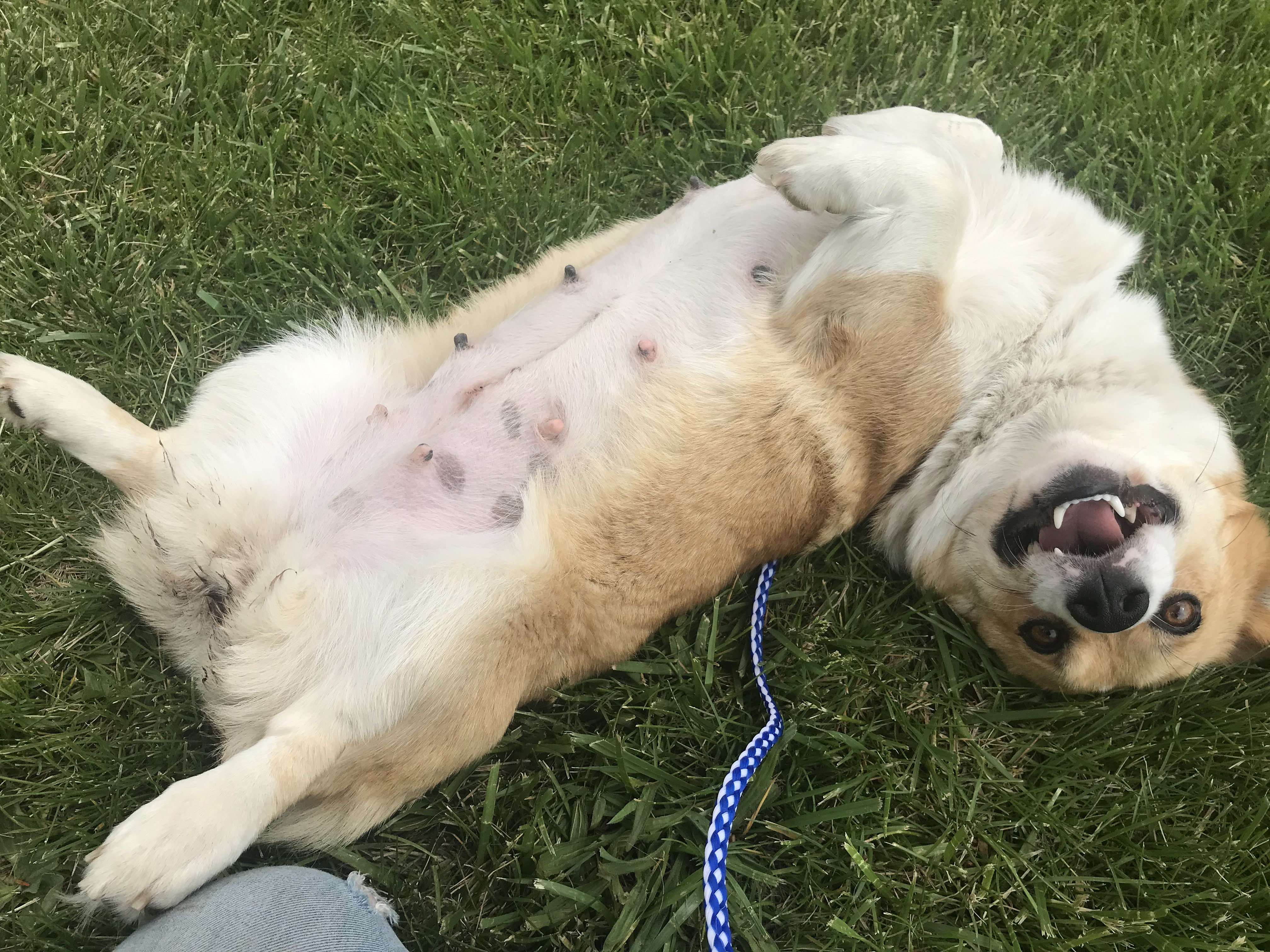
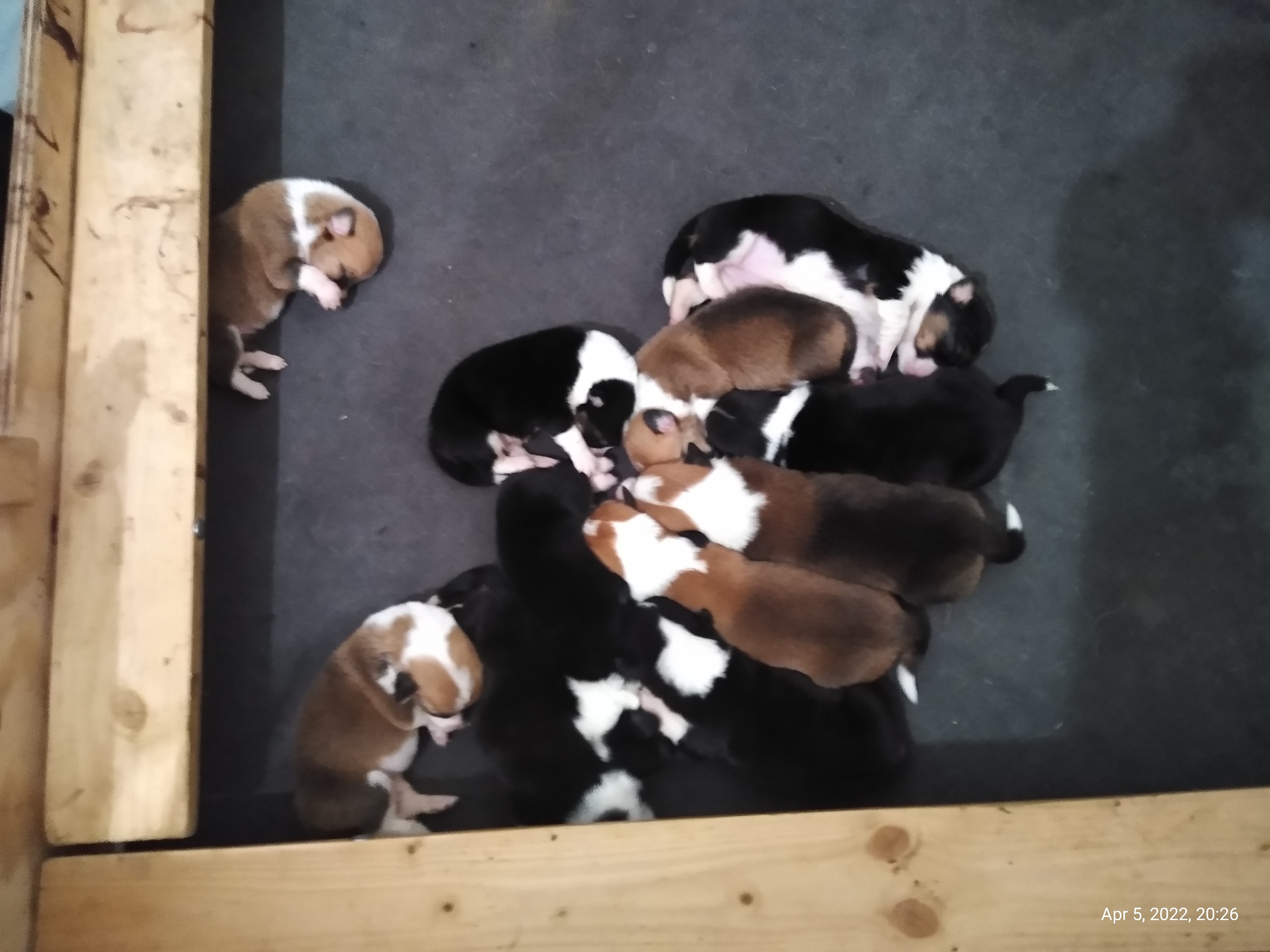
Munchie is now at 11 puppies. She is feeding and caring for all, but we are still assisting with bottle feeding and extra potty checks. In another week the puppies will be able to potty themselves and so some of the extra stuff will be able to be stopped, but we won’t be able to stop bottle feeding until the little guys are eating kibble.

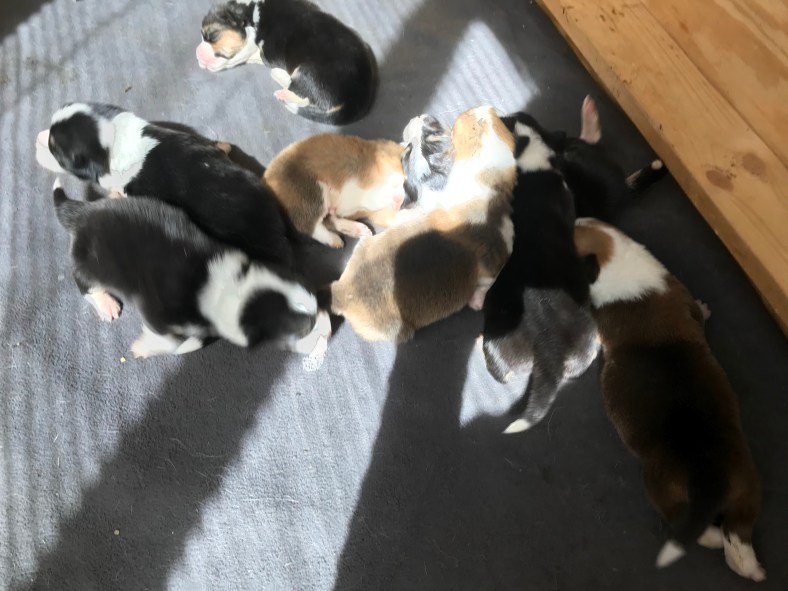
Munchie’s Puppy Pile

I have sent in DNA swabs for the fluffy gene. This company gets back to me within a couple of weeks, and at that point, we can get you started picking which puppy will be yours! When you do choose your puppy, if you have a name picked out already, let us know so that we can start using it when handling them. This way they will be familiar with their names before they come home!

Going home

Tahzi’s puppies are all getting ready to go home in the next few days. Someone already has left for his place of harmony. I hope he does well and stays there forever.

It’s sad to see them leave. We have loved them, cuddled, praised, and fed them for several weeks. Watching them play and showing them a small part of the world is a huge and lasting joy.

I fear for them, of course. They are going miles and miles away. Some of their new families will never contact us again. We may never know what kind of life they have. All I can do is hope that every puppy is well loved and cared for. And if anything should happen to their people, that they come back home to us before any bad should befall them.

I will always take them back. It doesn’t matter if they are 9 weeks or 19 years. No questions asked, I will give them a home.

So I truly want everyone to know that takes a puppy, bring them back if you can’t take care of them or keep them for any reason at all. Keep them safe, fed, and happy. Walk them, snuggle them, kiss them. Be responsible with their lives, for their lives are deeply precious.

3 Weeks

Eyes are opening, they are begining to hear things, and they have become interested in what mom is eating. Some mom’s will not let them sample their food, so it’s up to us to get them eating well. Because there is another thing that has been happening since they were born. Something that generally leads to their eventual weaning.

Baloo and Dori (from the Hobbit)

Teeth! When they are three weeks old you can begin to feel their teeth just under the surface of the gum. Those very pointy, sharp things called “milk teeth” emerge quickly. Why they are called milk teeth and not weaning teeth is beyond me.

As they those sharp needles come out of the gums and the pups forget to not use them while nursing, puppies get less and less milk. Mom will just up and leave right in the middle of dinner. Often times she will sit or stand to feed them now rather than lay down. Mom will also lay outside of the whelping box to avoid ear pulling and fur bites. They have just begun to play, they mouth each other and climb around. Their mobility is still unsteady and they just topple over and do a roll or two before they get back up and go on their way. They don’t become steady for a while yet.

Mista

Earlier I mentioned that their ears have opened up. They can hear, and this is a great time to use there names or teach them other words for coming, like “puppy, puppy”. This helps in  identifing their name with themselves, or as a group with the puppy call. I do this when I bring them their food.

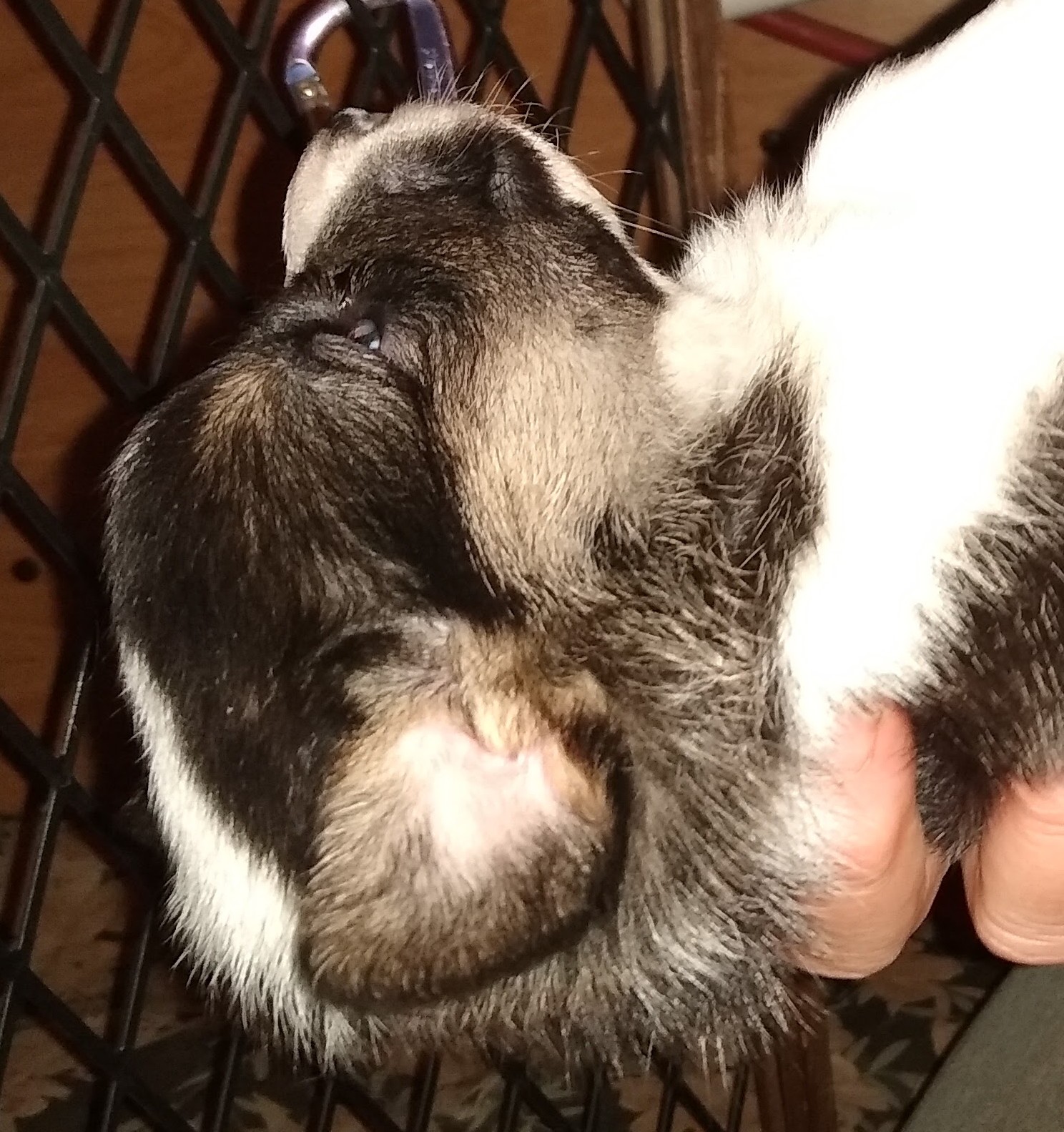
Eyes are open, although their vision is still very limited. They won’t get their adult eye color in until they get their adult coat. They have the dark “baby blue” eyes for quite some time. However if they are going to be permanent blue it will show sooner

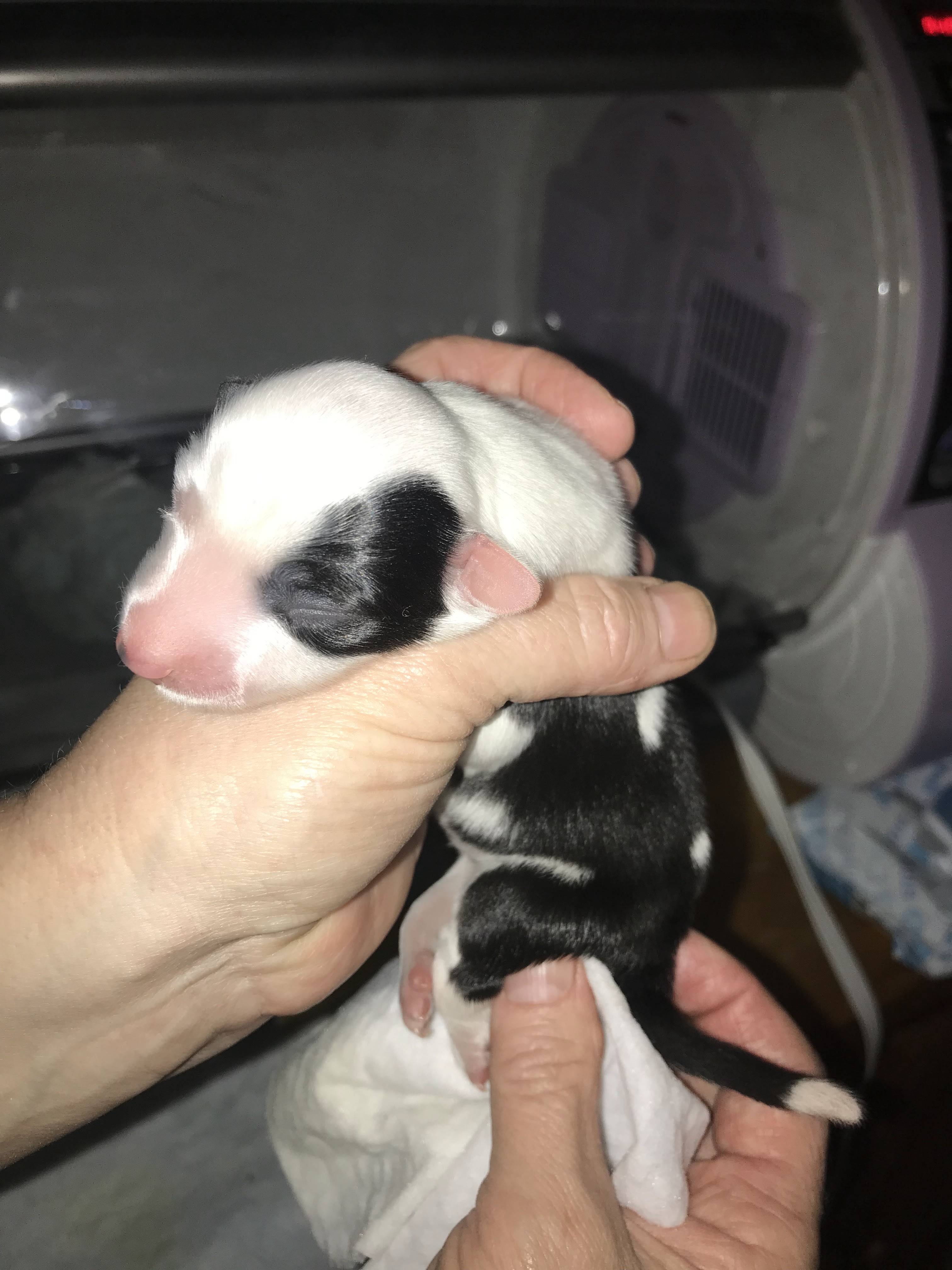
Puppy coats are soft and fluffy but change both in texture and color as they age. For instance, tri colors are born black and white. By 2 weeks the tan has begun to show on their cheeks and above their eyes. They will continue to get more and more red on their faces, shoulder and hips. That is, if they are a red headed or a capped tri. Black headed tris only get a little tan on their cheeks, above eyes, and it is a solid color brake on their legs and bum. Capped tris colors blend where they meet, and generally the have more red or tan than a black headed tri. It’s difficult to say at this point if the puppies will be black headed tri. As far as genetics, have  70% chance of of black headed tris. 50%  chance of red headed tris. As they get older it will be easier to tell.